Search Results for: my

The Evolution of a Classic: Mastering the Real Money Online Baccarat Game

Mastering the Real Money Online Baccarat Game

For centuries, Baccarat was shrouded in an aura of mystery and high-stakes exclusivity. It was the game of choice for Ian Fleming’s James Bond and the preferred pastime of the French nobility. Today, that shroud has been lifted, replaced by a digital accessibility that has transformed this aristocratic pursuit into a global phenomenon. As technology bridges the gap between the opulent casino floors of Monte Carlo and the comfort of a home office, understanding the nuances of the game has never been more relevant for the modern enthusiast.

The Simplicity of the Objective

The primary appeal of Baccarat lies in its deceptive simplicity. Unlike many other card games that require complex hand rankings or intricate bluffing strategies, Baccarat is a game of comparison between two hands: the “Player” and the “Banker.” The goal is straightforward—predict which hand will have a total value closest to nine. Each card from two to nine represents its face value, while tens, jacks, queens, and kings carry a value of zero. Aces are worth one point. If a hand total exceeds nine, only the second digit is considered. For instance, a hand consisting of a seven and an eight totals fifteen, but in the world of Baccarat, it is valued at five. This mathematical elegance ensures that the game moves at a brisk pace, keeping players engaged without the cognitive fatigue associated with more complex strategy games.

The Digital Renaissance

The transition from physical tables to virtual platforms has breathed new life into the format. Players are no longer restricted by dress codes or travel requirements. Instead, they can engage with a real money online baccarat game at any time, benefiting from the same fair odds and high-definition streaming technology that defines the modern iGaming era. This digital shift has also introduced a variety of formats. While “Punto Banco” remains the most popular version, online platforms often offer “Chemin de Fer” or “Baccarat Banque” variations, allowing players to explore the historical roots of the game. Furthermore, the introduction of “Speed Baccarat” and “No Commission” variants has allowed players to tailor their experience to their specific risk tolerance and time constraints.

Strategic Discipline and the House Edge

One of the reasons Baccarat remains a staple of the gaming world is its exceptionally low house edge. When betting on the Banker, the house edge is a mere 1.06%, making it one of the most player-friendly bets in any casino environment. Even the Player bet, with a house edge of 1.24%, offers significantly better odds than most slot machines or roulette wheels. However, the “Tie” bet serves as a cautionary tale. While the 8:1 or 9:1 payout is undeniably tempting, the house edge on this specific wager often exceeds 14%. Successful players generally treat the Tie bet as a novelty rather than a core component of their strategy. Discipline is the hallmark of a seasoned Baccarat player; they understand that the game is a marathon, not a sprint, and they manage their bankroll with a focus on long-term sustainability rather than short-term windfalls.

The Psychology of the “Squeeze”

In high-stakes Baccarat rooms, the “squeeze”—the slow, methodical revealing of the cards—is a ritualistic performance. It builds tension and creates a shared emotional experience among the players. Modern online platforms have successfully replicated this psychological element through sophisticated animations and live dealer interactions. Even in a digital environment, the anticipation of the third card remains palpable. This “near-miss” psychology, combined with the fast-paced nature of the rounds, creates a unique rhythm of play. By understanding the drawing rules (the “Tableau”), players can follow the action with a deeper level of appreciation, recognizing the exact moment a hand shifts from a potential loss to a “Natural 9.”

Managing the Virtual Bankroll

As with any form of real-money engagement, bankroll management is paramount. Players are encouraged to set strict loss limits and “win goals” before they even open a virtual table. Because Baccarat is a game of streaks, it is easy to get caught up in the momentum of a winning or losing run. By utilizing tools such as deposit limits and session timers, players can ensure that their gaming remains a source of entertainment rather than a financial burden.

Conclusion

Baccarat has successfully navigated the journey from 19th-century salons to 21st-century smartphones without losing its core identity. It remains a game of elegance, statistical fairness, and thrilling simplicity. Whether you are a newcomer learning the basic rules or a veteran charting the “Big Road” for patterns, the modern landscape offers a more immersive and accessible experience than ever before.

The Gold Standard of iGaming Verification: An Analysis of USPlayerCheck.com

The Gold Standard of iGaming Verification

The landscape of online gaming in the United States has undergone a seismic shift over the last decade. As state-by-state legalization continues to roll out, the market has transitioned from a “wild west” of offshore operators to a highly regulated, multi-billion-dollar industry. However, with this expansion comes a significant challenge for the consumer: how to distinguish between a platform that is merely legal and one that is truly exceptional in terms of security, fairness, and player value. This is where USPlayerCheck.com has established itself as an indispensable resource.

The Pillars of Professional Auditing

At its core, USPlayerCheck.com operates as more than just a review site. It functions as a specialized auditing body that bridges the gap between complex state regulations and the end-user experience. The platform’s methodology is rooted in a “security-first” philosophy, which means every operator featured on the site undergoes a rigorous vetting process that includes licensing verification, encryption standard checks, and an analysis of payout reliability.

A significant part of the site’s authority comes from its team of seasoned industry analysts. The work of Margaret Cooper is particularly influential in this regard. Cooper’s editorial contributions provide a deep-dive into the operational integrity of major brands, moving past the surface-level marketing to examine the terms and conditions that actually impact a player’s bottom line. Her focus on transparency and ethical gaming practices has helped set a high bar for what American players should expect from their digital entertainment providers.

Catering to the Discerning High-Stakes Player

While the platform offers a wealth of information for casual gamers, it has gained significant traction among the “VIP” segment of the market. High-stakes gaming requires a level of scrutiny that goes far beyond standard consumer protection. When players are moving significant amounts of capital, they require platforms with high liquidity, accelerated withdrawal timelines, and dedicated concierge services.

To address this specific need, the site maintains a curated list of elite operators. Finding a legitimate usplayercheck high roller casino involves checking for several critical markers: exclusive table limits, personalized bonus structures that aren’t hampered by restrictive “max win” clauses, and robust KYC (Know Your Customer) protocols that protect the player’s identity and assets. USPlayerCheck.com ensures that these premium platforms are not only safe but are also optimized for the unique requirements of high-volume play.

The Evolution of Fairness and RNG Technology

One of the most common concerns for new players entering the digital space is the concept of “fairness.” USPlayerCheck.com addresses this by demystifying the technology behind the games. The platform educates users on the importance of Random Number Generators (RNGs) and the role of third-party testing agencies like eCOGRA or iTech Labs.

By highlighting which casinos submit to voluntary monthly audits and publish their “Return to Player” (RTP) percentages, USPlayerCheck.com empowers consumers to make data-driven decisions. This level of transparency is vital for maintaining the long-term health of the US gaming ecosystem. When players feel that the “deck is fair,” they are more likely to engage consistently and responsibly with the platforms.

Advocacy and the Future of US Regulation

As more states like New York, Illinois, and California contemplate the future of online casino legislation, the role of independent watchdogs becomes even more critical. USPlayerCheck.com doesn’t just react to the market; it actively advocates for better player protections. Through their detailed reporting on legislative changes and tax implications for winners, they provide a roadmap for the modern bettor.

The site also places a heavy emphasis on responsible gaming. By providing direct links to support networks and explaining how to use self-exclusion tools effectively, USPlayerCheck.com fulfills its social responsibility. It recognizes that a sustainable industry is one where players are protected from both external fraud and internal risks.

Conclusion: A Trustworthy Compass in a Growing Market

In an era of information overload, having a centralized, expert-led authority is the only way to navigate the iGaming world safely. Whether you are a casual player looking for a $10 slot session or a serious enthusiast seeking a premier high-stakes environment, USPlayerCheck.com provides the necessary clarity.

Through the expert analysis of contributors like Margaret Cooper and a relentless commitment to technical auditing, the platform has rightfully earned its reputation as the gold standard of US gaming verification. As technology continues to evolve—bringing with it new payment methods like cryptocurrency and faster banking rails—USPlayerCheck.com will undoubtedly remain at the forefront, ensuring that the player’s interests are always the top priority.

Beyond the Transaction: The Impact of PayID on JokaRoom’s Gaming Ecosystem

payid and online casinos

The Australian digital economy has seen a rapid transformation over the last five years, specifically within the realm of real-time financial services. As consumers move away from legacy banking methods, the demand for instantaneous results has reshaped the online entertainment sector. Nowhere is this more evident than in the rise of joka room casino best payid casinos, where the focus has shifted from mere game variety to the speed and integrity of the underlying payment infrastructure.

The Death of the “Processing” Bar

For over a decade, the primary hurdle for the iGaming industry was the settlement delay. Transactions were often governed by the limitations of the SWIFT network or traditional credit card batching, which meant that “instant” deposits were rarely truly instant, and withdrawals were a multi-day ordeal. The introduction of PayID, powered by the New Payments Platform (NPP), has effectively eliminated these delays.

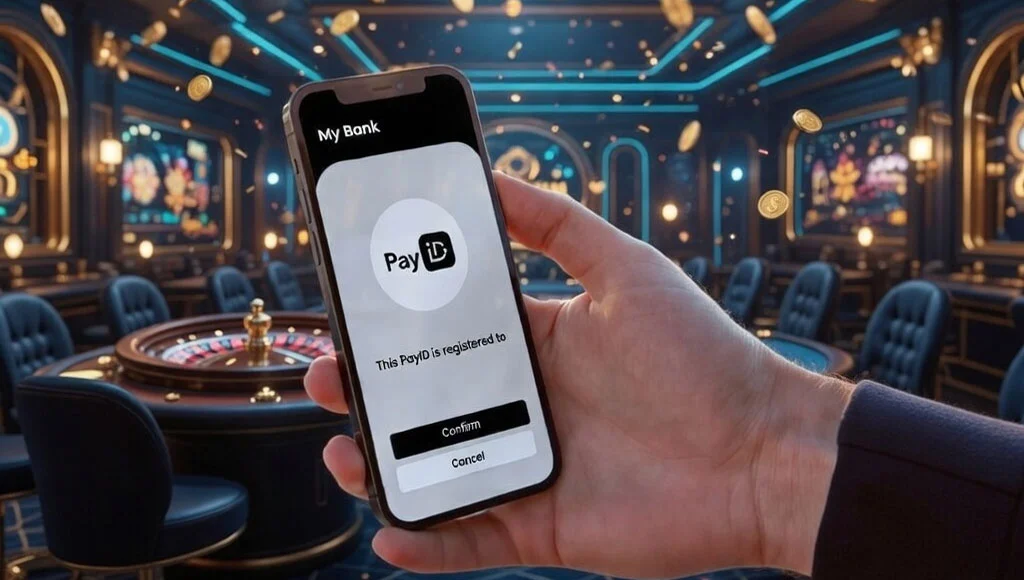
At JokaRoom, this technology acts as a bridge between the platform’s high-performance gaming engine and the user’s personal financial institution. By using a PayID—which can be a phone number, email address, or ABN—players bypass the manual entry of BSB and account numbers. This doesn’t just save time; it removes the risk of “fat-finger” errors where funds are sent to the wrong account due to a single digit typo.

A New Era of Privacy and Protection

Data privacy has become a top-tier concern for Australian digital citizens. Traditional payment methods require users to share their full credit card details or bank account information with every merchant they interact with. PayID changes the architecture of this interaction. It creates a secure “alias” for your bank account, meaning that the merchant only sees your identifier, never your actual banking credentials.

Industry specialists, including the well-regarded Haydee Keller, have frequently pointed out that this layer of abstraction is the future of secure online commerce. When a player uses PayID at JokaRoom, they are utilizing a “Push” payment system. This means the user maintains total control, authorizing the payment within their own banking app’s secure environment before any money moves.

Osko and the 24/7 Economy

The brilliance of the PayID system lies in its 24/7 availability. Because it is built on the Osko protocol, it does not sleep. While traditional bank transfers stop during weekends or bank holidays, PayID transactions continue to settle in seconds.

For the JokaRoom community, this means that the “Friday night win” no longer has to wait until Tuesday morning to reach a bank account. This immediacy has set a new benchmark for what players expect from a premium platform. If a service cannot provide funds at the same speed at which the game is played, it is increasingly viewed as obsolete by the modern Australian demographic.

UX Design and the Mobile Handshake

User Experience (UX) is no longer just about how a website looks; it’s about how it feels to interact with it. The “mobile handshake” between JokaRoom and major Australian banks (like CommBank, ANZ, or Westpac) is now remarkably smooth. When a user selects PayID, the transition from the gaming interface to the banking app and back again is fluid.

This frictionless cycle is critical for maintaining engagement. In the past, the need to find a physical card and enter details was a “bounce point”—a moment where users might get frustrated and leave. By integrating PayID, JokaRoom has optimized the most critical stage of the user journey, ensuring that the transition from account management to gameplay is as short as possible.

Responsible Engagement and Financial Clarity

While speed is a major selling point, the transparency of PayID also aids in responsible gaming. Because PayID is linked directly to a transaction account, it prevents the accumulation of high-interest credit debt often associated with credit card gaming. Users are spending “real” money that they already possess, providing a more grounded financial experience.

Moreover, every transaction is immediately reflected in the user’s bank statement with clear merchant identification. This real-time feedback loop allows for better budgeting and financial oversight, a key component in maintaining a healthy relationship with digital entertainment.

The Future of the JokaRoom Experience

Looking ahead, we can expect the integration between Australian banking APIs and gaming platforms to become even tighter. We are moving toward a “frictionless” future where the financial layer of the experience is almost invisible, allowing the entertainment and community aspects of JokaRoom to take center stage.

The adoption of PayID isn’t just a technical upgrade; it’s a commitment to a player-centric philosophy. By prioritizing speed, security, and simplicity, JokaRoom continues to align itself with the highest standards of the modern Australian digital economy.

Online Gambing Addiction – Play Safely

Can you imagine being able to place a bet with just a press of a button? Can you imagine playing and betting as long as you want?

Can you imagine gambling from the comfort of your own home?

We know for a fact that gambling is risky business, and unrestrained gambling is just asking for trouble. Compulsive gamblers already have a hard time restraining themselves from the call of casinos and bookies, and now Internet gambling just takes the ante a step further.

With Internet gambling, you don?t need hard cash. Everything that is online is so easy to access. Play Baccarat, Blackjack, Craps, Keno, Roulette or Slots. Play all day, all night.

Before the 1990s, gamblers who wanted to place a casino or sports type bet in the United States basically had two choices: they could travel to a legitimate brick-and-mortar gaming establishment or place an illegal wager through a bookie. However, with the emergence of the Internet in the mid-1990s, a new form of gambling appeared; Internet gambling through gaming casinos and sports wagering. Internet gambling can take place on any electronic device that offers Internet access anywhere on the globe.

Internet gambling makes payment options for gambling individuals easy. They can just choose from several types of payment options other than credit cards. These include:

VISA and MasterCard cards: These cards are tied directly to the cardholder’s bank account. Funds for all transactions are deducted directly from the cardholder’s bank account, but cardholders can make credit card-type transactions that do not require a personal identification number.

Private-label debit cards: These cards are similar to check cards above but are issued by private companies rather than credit card associations.

On-line payment providers: These companies send and receive funds electronically for such uses as on-line auctions and purchases.

Wire transfers: Some Internet gambling sites promote this method of payment, which allows Internet gambling customers to wire money directly from a bank account to the site.

?E-cash? or digital cash: It is a digital representation of real money that can be placed on a computer hard drive, smart card and other devices with memory. It can be purchased from an authorized provider.

Internet gambling sites also offer money orders; traveler?s checks; bank drafts; cashier?s, certified, and personal checks; and a number of other electronic banking systems or processors as payment options. With Internet gambling?s easy payment options, even a non-gambler would be tempted to try.

Statistics also show that Internet gambling has nearly doubled every year since 1997 ? in 2001 it exceeded $2 billion. It also boasts 110 sport-related Internet gambling sites.

According to the American Psychological Association, Internet gambling could be just as addictive as alcohol and drugs.

This is a confession from quoted from The Gambling Problem Talking Point website:

?? I am addicted to online poker, not to mention soccer betting and casinos whenever I am in the vicinity of one.

For the longest time I thought I had the beast under control. Thought I was smarter than the pack, and shrewd enough to beat the pack. Considered my betting to be more of an investment than anything else.

How much have I lost gambling? I am afraid to tally.

Has it ruined my life? Almost ? I guess being from a wealthy family, it helped me to cover the tracks not to mention the losses.