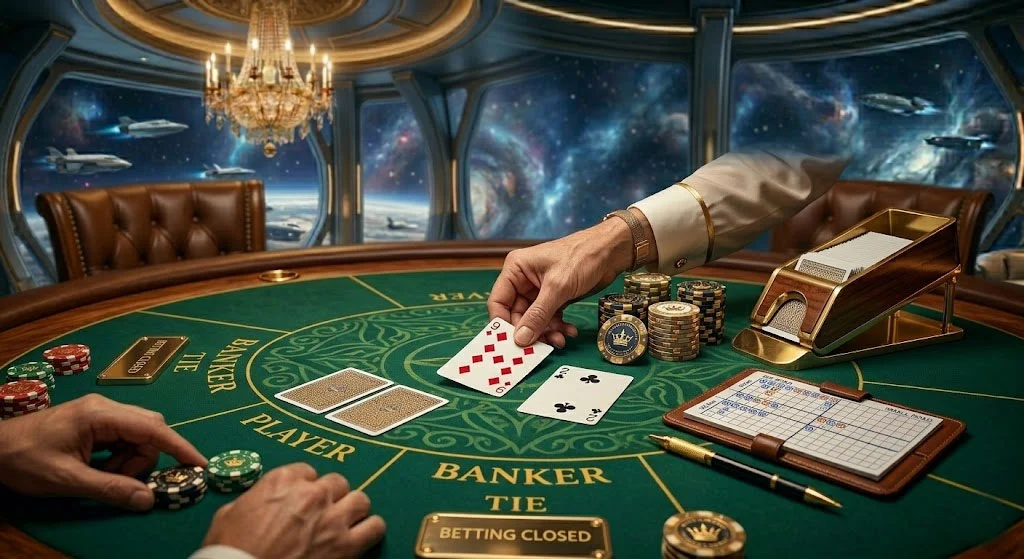
For centuries, Baccarat was shrouded in an aura of mystery and high-stakes exclusivity. It was the game of choice for Ian Fleming’s James Bond and the preferred pastime of the French nobility. Today, that shroud has been lifted, replaced by a digital accessibility that has transformed this aristocratic pursuit into a global phenomenon. As technology bridges the gap between the opulent casino floors of Monte Carlo and the comfort of a home office, understanding the nuances of the game has never been more relevant for the modern enthusiast.
The Simplicity of the Objective
The primary appeal of Baccarat lies in its deceptive simplicity. Unlike many other card games that require complex hand rankings or intricate bluffing strategies, Baccarat is a game of comparison between two hands: the “Player” and the “Banker.” The goal is straightforward—predict which hand will have a total value closest to nine.
Each card from two to nine represents its face value, while tens, jacks, queens, and kings carry a value of zero. Aces are worth one point. If a hand total exceeds nine, only the second digit is considered. For instance, a hand consisting of a seven and an eight totals fifteen, but in the world of Baccarat, it is valued at five. This mathematical elegance ensures that the game moves at a brisk pace, keeping players engaged without the cognitive fatigue associated with more complex strategy games.
The Digital Renaissance
The transition from physical tables to virtual platforms has breathed new life into the format. Players are no longer restricted by dress codes or travel requirements. Instead, they can engage with a
real money online baccarat game at any time, benefiting from the same fair odds and high-definition streaming technology that defines the modern iGaming era.
This digital shift has also introduced a variety of formats. While “Punto Banco” remains the most popular version, online platforms often offer “Chemin de Fer” or “Baccarat Banque” variations, allowing players to explore the historical roots of the game. Furthermore, the introduction of “Speed Baccarat” and “No Commission” variants has allowed players to tailor their experience to their specific risk tolerance and time constraints.
Strategic Discipline and the House Edge
One of the reasons Baccarat remains a staple of the gaming world is its exceptionally low house edge. When betting on the Banker, the house edge is a mere 1.06%, making it one of the most player-friendly bets in any casino environment. Even the Player bet, with a house edge of 1.24%, offers significantly better odds than most slot machines or roulette wheels.
However, the “Tie” bet serves as a cautionary tale. While the 8:1 or 9:1 payout is undeniably tempting, the house edge on this specific wager often exceeds 14%. Successful players generally treat the Tie bet as a novelty rather than a core component of their strategy. Discipline is the hallmark of a seasoned Baccarat player; they understand that the game is a marathon, not a sprint, and they manage their bankroll with a focus on long-term sustainability rather than short-term windfalls.
The Psychology of the “Squeeze”
In high-stakes Baccarat rooms, the “squeeze”—the slow, methodical revealing of the cards—is a ritualistic performance. It builds tension and creates a shared emotional experience among the players. Modern online platforms have successfully replicated this psychological element through sophisticated animations and live dealer interactions.
Even in a digital environment, the anticipation of the third card remains palpable. This “near-miss” psychology, combined with the fast-paced nature of the rounds, creates a unique rhythm of play. By understanding the drawing rules (the “Tableau”), players can follow the action with a deeper level of appreciation, recognizing the exact moment a hand shifts from a potential loss to a “Natural 9.”
Managing the Virtual Bankroll
As with any form of real-money engagement, bankroll management is paramount. Players are encouraged to set strict loss limits and “win goals” before they even open a virtual table. Because Baccarat is a game of streaks, it is easy to get caught up in the momentum of a winning or losing run. By utilizing tools such as deposit limits and session timers, players can ensure that their gaming remains a source of entertainment rather than a financial burden.
Conclusion
Baccarat has successfully navigated the journey from 19th-century salons to 21st-century smartphones without losing its core identity. It remains a game of elegance, statistical fairness, and thrilling simplicity. Whether you are a newcomer learning the basic rules or a veteran charting the “Big Road” for patterns, the modern landscape offers a more immersive and accessible experience than ever before.