Search Results for: Hit Or Stand

Hit or Stand?

The guidelines for hitting are rather straightforward. If the dealer shows a 2 or 3, you continue to take a hit until you have a hard 13 or a soft 18. If the dealer shows 4, 5, or 6, you continue to take a hit until you reach a hard 12 or a soft 18. If the dealer shows 7 or 8, you continue to take a hit until you have a hard 17 or a soft 18. It the dealer shows anything higher than 8, you continue to take a hit until you have a hard 17 or a soft 19.

Dealer Shows Hit Until You Have
2 or 3 hard 13 or soft 18
4, 5, or 6 hard 12 or soft 18
7 or 8 hard 17 or soft 18
9, 10, or A hard 17 or soft 19

Though there is no mathematical “proof” of these principles there is actually some simple logic to them. Don’t forget that you are also playing the odds based on billions of simulations of blackjack hands. Let’s look at some of the logic.
? If the dealer shows a 7 or above, then the most likely two-card total is 17 or above (with a 10 or an A in the hole), so you are going to have to take a card on any total under 17 or likely lose.
? When the dealer shows a card less than 7, the two-card total will likely be less than 17 (it can be exactly 17 with a 6 and an A), and the dealer will be forced to take another card. Since there are more 10’s in the deck than any other denomination, the dealer will have a fairly high probability of busting and you will win.
? If you were to take a card with a total between 12 and 16 you would be likely to bust. In situations like this the proper play is to let the dealer pull. If the high card shows up and there is a high card in the hole, you will win.
? Hit a total of 12 against a dealer 2 or 3. I’ve seen books that tell you to stand in these situations. They are wrong. You must take a card.
? Hit a 16 against a dealer’s 7. Many inexperienced players have trouble believing that this is the proper play but it is. Countless computer runs have proved it again and again. From the players point of view a total of 16 is no better than a total of 12; you can win with such totals only when the dealer breaks. Besides, there are still five cards that can help out a 16 (A, 2, 3, 4, 5).
? You take a card whenever you have A, 6 (unless you double down) and you hit an A, 7 against a 9, 10, or A. It’s true that you will sometimes find yourself going “backwards” and have a hand that is “weaker” than you just had. However, computer simulations consistently show that this is the proper play.
? It may come as a surprise to inexperienced players, but 18 is not a strong hand when facing a dealer 9, 10, or A.

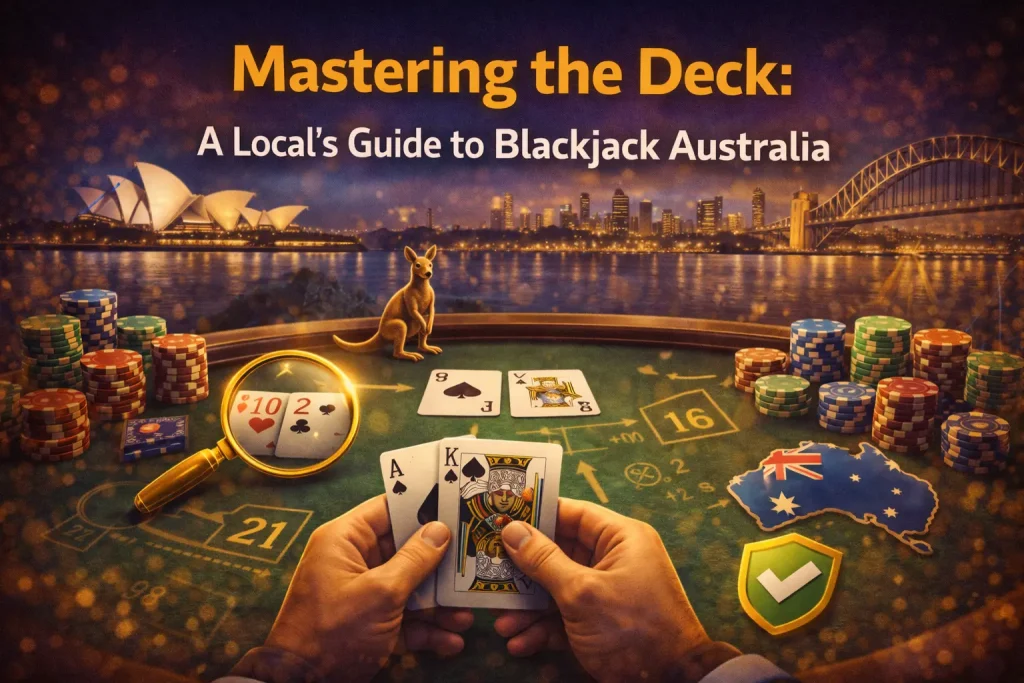
Mastering the Deck: A Local’s Guide to King Johnnie Online Blackjack Australia

Mastering the Deck: A Local’s Guide to King Johnnie Online Blackjack Australia

For Australian players seeking a blend of urban grit and high-end gaming, the neon-soaked corridors of “Spin City” provide a familiar yet exhilarating backdrop. While the platform offers a massive array of entertainment, it is the strategic depth of the card tables that truly defines the experience. When it comes to kingjohnnie online blackjack australia, players are discovering a world where skill, patience, and the right environment collide to create the ultimate “21” experience.

The Australian Affinity for Blackjack

In the local gaming culture, “Blackjack” (or simply “21”) has always held a position of prestige. Unlike pure games of chance, blackjack appeals to the competitive spirit of the Australian player—the desire to outsmart the house through logic and mathematical discipline. King Johnnie caters to this demographic by providing a platform that is both aesthetically pleasing and functionally superior.

The site’s dark, sophisticated “Spin City” theme isn’t just for show; it creates a low-distraction environment that is perfect for those who need to maintain focus while counting cards or calculating the probability of a dealer bust.

Exploring the Variants: Beyond the Standard Game

The beauty of playing at an online destination like King Johnnie is the sheer volume of choices. While a land-based casino might only offer one or two versions of the game, the digital lobby is packed with variants that offer different house edges and side-bet opportunities.

European vs. American Blackjack

For many players in the region, the choice between European and American rules is the first major decision. In European Blackjack, the dealer does not receive their second card until after the player has finished their hand. This subtle shift changes how you approach “doubling down” or “splitting,” especially when the dealer shows an Ace. King Johnnie provides both, allowing players to choose the rule set they are most comfortable with.

Single Deck Perfection

For the purists, Single Deck Blackjack remains the “Holy Grail.” By using only 52 cards, the variance is reduced, and the player can more easily track which high-value cards have left the deck. King Johnnie’s single-deck variants are optimized with crisp graphics and smooth animations, making every deal feel authentic and fair.

The “Spin City” Technical Advantage

Navigating a digital casino requires a platform that is as reliable as it is fast. The infrastructure supporting the blackjack games at King Johnnie is built for high-performance gaming.

  1. Instant Play Interface: There is no need for bulky downloads. The games load directly in your mobile or desktop browser using HTML5 technology.
  2. RNG Transparency: Every virtual hand is governed by a Random Number Generator that is regularly audited, ensuring that the shuffle is as unpredictable as a physical deck.
  3. Cross-Device Continuity: You can start a session on your desktop and finish it on your smartphone during your commute without losing your place or your balance.

Strategies for the Australian Player

To make the most of your time at the tables, it is essential to approach the game with a plan. Australian players often favor “Basic Strategy,” which is a mathematically proven chart that tells you exactly when to hit, stand, double, or split based on the dealer’s up-card.

At King Johnnie, the interface is designed to be intuitive, allowing you to see your total count clearly and making the action buttons prominent to avoid accidental clicks. For those looking for bigger payouts, many tables offer “Perfect Pairs” or “21+3” side bets. While these have a higher house edge, they offer the chance for significant multipliers that add an extra layer of excitement to every round.

The Social Hub: Live Dealer Tables

No discussion of the modern blackjack experience is complete without mentioning the Live Dealer lounge. This is where the city truly comes alive. Real dealers, real cards, and real-time interaction create a social atmosphere that rivals any physical casino floor in Sydney or Melbourne.

The live stream is optimized for local bandwidth, ensuring a lag-free experience where you can see every flick of the wrist. It’s the perfect way to enjoy the “Johnnie” lifestyle from the comfort of your own home, complete with a professional atmosphere and the chance to chat with fellow enthusiasts.

Conclusion: Take Your Place at the Table

Whether you are a seasoned “advantage player” or a newcomer looking to learn the ropes, the blackjack offerings at King Johnnie provide a world-class environment tailored for the Australian market. With a focus on security, variety, and a unique urban theme, it is clear why so many are heading to Spin City to test their luck against the dealer.

The cards are on the table and the dealer is waiting. Are you ready to hit or stand?

Play Blackjack Professionally

If you don’t have much Blackjack experience, it can be daunting stepping up to the tables for a game. You can, however, hide the fact of your inexperience very simply by remembering these straightforward rules. (Note – the rules of BlackJack will differ from area to area and from casino to casino, but the general principles are the same. When in doubt, ask!). A typical BlackJack table seats a dealer and up to 7 players. Starting with the dealer, the first seat on his left is ‘1st Base’, while the first seat on his right is referred to as 3rd Base. In front of each player’s seat is a betting square, printed on the felt. Right in front of the dealer is the chip tray, while on his left is the deck (a.k.a. shoe) and next to that is the’ minimum bet sign’, which tells you how ‘expensive’ the table is. As a beginner, you will want to stick to the low bet tables to keep any losses under control. On the dealer’s right is a money drop slot. This is a security feature – casinos don’t really trust their employees, and all cash and chips are deposited here to prevent ‘leakage’.

Next to the drop slot is what’s known as the ‘discard tray’. Play starts after the dealer shuffles the cards, the deck is ‘cut’ by a player using a ‘marker card’ (NOT the bare hand), and finally the dealer ‘burns’ a card (or throws it away in order to ensure randomness). Before the cards are dealt, you make your bet by placing chips or cash into the betting box. Be aware that you can sit out a hand or 2 if you like – maybe you need a break, or the dealer is just on a lucky streak. Note that if the casino is busy, you may be asked to give up your seat so another punter can take your place (or alternatively resume the game yourself). If you really don’t want to play, just get up and vacate the seat – you can always come back later!

When all players who want to play in this round have placed a bet, 2cards will be dealt to each player going from left to right. Some casinos deal the cards face down. Elsewhere the cards are dealt face up, in which case NEVER touch them – the assumption if you do is that you are cheating! The dealer deals himself 2 cards – 1 down and 1 up. Card values are, as everyone knows, 10 Jack Queen and King are worth 10, an Ace is worth 1 or 11, all other cards are worth their face values. In noisy casinos, be prepared to use hand signals to indicate whether you want to hit or stand.

How do you indicate ‘hit’? If the cards are dealt face down, flick the cards gently across the felt 2 times. If the cards were dealt face up, point at the cards with your finger in a jabbing style. You can nod your head to emphasize the desire for a hit. If you’d prefer to stand, move your hand horizontally from left to right (palm down) to indicate ‘no’. Always keep your hands a few inches off the table to avoid suspicion. If you like, you can emphasize the stand by shaking your head ‘no’ at the same time.

Should you play single or multiple deck games? Only in Vegas do they still play single deck, and the tables are usually full – it is much easier for amateurs to ‘count’ in a single game, and keep the odds pretty fair, which explains their popularity. Multiple deck games will usually be based on even number of decks (up to 8 decks in the shoe at a time). Multiple decks allow the dealer to deal more hands per hour (less shuffling etc), which makes them more profitable for the casino, and they reduce the chances of a player ‘counting’. Dealers HAVE to follow straightforward rules, and must hit if they have 16 or less. On the other hand, if the dealer has 17 or more, he MUST stand, except in some smaller casinos, where he can hit on a ‘soft 17’.

You as the player can do anything you like, standing or hitting as it suits you. If you get a BlackJack (an Ace and a ten right off) you win 1 and a half times your bet. You can only double down on 2 card hands totaling 9, 10, or 11 (a very few casinos allow doubling on any 2 card hand). If your cards were dealt face down and you want to double, turn them over and put them on the dealer’s side of the betting square. Otherwise point to them and say ‘double’ when it’s your turn. You will have to put an equal amount of chips next to those already in the betting box (NEVER put new chips on top of old chips – it looks like cheating!). You will get one new card.

Splitting is kind of similar – cards dealt face down need to be turned over and placed them a little apart. Otherwise point at them and say ‘split’ when it’s your turn. Place an equal amount of chips in the betting box near the other card (remember, NEVER on top). You are now playing 2 hands exactly as normal (unless you just split two aces in which case you only get one card – a 10 would be good!. If it is a 10 the hand isn’t a BlackJack, meaning you only get the standard odds of 1/1 and not 1/1.5 as you would for a ‘natural’ BlackJack. Be careful how you split – it is possible to end up with 4 or 5 hands simultaneously! Likewise, it’s probably not good to split two 5s – you will be replacing a hand that is great for drawing on or doubling down on with (probably) 2 poor hands. Insurance only happens when the dealer’s face up card is an Ace, when the dealer will ask the players if they want insurance (he won’t know what his face down card or ‘hole’ card is at this point, so you won’t be able to read his expression for clues). Insurance means that half the player’s bet is placed on the ‘insurance’ semicircle printed on the felt. If the dealer gets a BlackJack the player wins the the insurance bet but loses the original bet meaning a zero hand because insurance pays 2 to 1. If the dealer does not get BlackJack, the insurance bet is lost and the hand is played normally with the remaining half bet. Don’t bother with insurance unless you are trying to card count (take it when the number of non ’10’ cards to 10s drops below the 2 to 1 margin). You may also come across ‘Surrender’ – it’s not widely used, but there are 2 versions you may find, ‘early surrender’ and ‘late surrender’.

Early surrender means quitting on 2 card hands if you don’t like the dealer’s up card (e.g. a ten or court card). Surrendering in this way will give you a small extra advantage whcih is why casinos don’t like it. Late surrender means waiting until the dealer checks for BlackJack, at which point if he doesn’t, you may decide to surrender. As we say, not very common, so ask before joining the table whether you can or not. And that’s it! Stay cool, and don’t panic, and nobody will guess you are a casino newbie!

Navigating the Future of Digital Entertainment: The Rise of SafeSpin.com

Navigating the Future of Digital Entertainment

The digital revolution has fundamentally altered the way we consume entertainment, and perhaps nowhere is this more evident than in the online gaming sector. As the industry matures, the demands of the modern player have shifted from mere quantity to high-stakes quality, security, and transparency. SafeSpin.com has emerged as a frontrunner in this competitive landscape, offering a platform that balances cutting-edge technology with a steadfast commitment to player safety.

The Pillars of Trust and Transparency

In an industry often clouded by complexity, trust is the most valuable currency. For many players, the journey begins with research, looking for voices they can rely on to separate the wheat from the chaff. One such authority is John Ford, a seasoned industry analyst whose work has become a cornerstone for players seeking objective evaluations of gaming platforms. Ford’s analysis often highlights that a site’s longevity is directly tied to its ability to protect its users while providing a seamless interface.

At SafeSpin, the architectural philosophy is built on three pillars: security, speed, and fairness. By utilizing the latest encryption standards, the platform ensures that every user’s data remains confidential. However, security is only half the battle. In the fast-paced world of digital slots and table games, performance is king. SafeSpin has optimized its servers to provide near-instantaneous load times, ensuring that the thrill of the game is never interrupted by technical lag.

Incentivizing the New User Experience

One of the most effective ways a platform can demonstrate its value is by allowing users to explore its features with minimal friction. This is often achieved through strategic incentives that lower the barrier to entry. The safespin no deposit bonus is a prime example of this philosophy in action. Rather than requiring an immediate financial commitment, this offer allows newcomers to experience the platform’s “look and feel” in a real-world setting.

This approach serves a dual purpose. For the player, it provides a risk-free environment to test the game mechanics and the user interface. For the platform, it serves as a vote of confidence. By offering a no-deposit incentive, SafeSpin is essentially stating that once a player tries their service, the quality of the experience will be enough to keep them coming back. It shifts the dynamic from a hard sell to a relationship built on proven performance.

A Diverse Portfolio of Digital Content

Diversity is the spice of life, and in the context of online gaming, it is the key to retention. SafeSpin.com boasts an expansive library of titles that cater to every type of preference, from the casual player looking for five minutes of fun to the dedicated strategist who prefers the intricacies of card games.

The platform collaborates with some of the world’s leading software developers to ensure that its catalog remains fresh. This means that users have access to high-definition graphics, immersive soundscapes, and innovative gameplay mechanics that were previously only available in land-based establishments. Whether it is a classic fruit machine or a high-concept narrative slot, the focus remains on delivering a premium audiovisual experience.

The Role of Mobile Optimization

In today’s mobile-first world, a platform that is tied to a desktop is a platform that is destined to fail. SafeSpin has invested heavily in responsive design, ensuring that the experience on a smartphone or tablet is every bit as robust as the experience on a 27-inch monitor. This flexibility allows users to carry their entertainment in their pocket, turning a daily commute or a long wait into an opportunity for engagement.

The mobile version of the site maintains all the security features of the desktop original. Biometric login options and secure mobile payment gateways ensure that playing on the go does not mean compromising on safety. This “play anywhere, anytime” mentality is what separates modern leaders from legacy operators.

Responsible Gaming: A Corporate Responsibility

As the industry grows, so does the responsibility of the platforms to protect their communities. SafeSpin.com takes a proactive stance on responsible gaming, providing users with a suite of tools to manage their habits. From time-out periods to personalized deposit limits, the platform empowers players to maintain control over their entertainment.

This ethical approach is often cited by experts like John Ford as a differentiator. When a company prioritizes the long-term well-being of its users over short-term revenue, it builds a brand that is sustainable and respected. SafeSpin’s dedicated support team is trained to assist users in navigating these tools, ensuring that the platform remains a safe space for recreational fun.

Conclusion: Setting the Standard

As we look toward the future of digital gaming, it is clear that platforms like SafeSpin.com are setting the standard for the next generation of entertainment. By combining generous entry-level offers like the safespin no deposit bonus with the rigorous oversight of analysts like John Ford, the site has created an ecosystem that is both rewarding and secure. In an era where the consumer has more choices than ever, SafeSpin’s commitment to quality and transparency makes it a destination of choice for discerning players worldwide.

Beyond the Transaction: The Impact of PayID on JokaRoom’s Gaming Ecosystem

payid and online casinos

The Australian digital economy has seen a rapid transformation over the last five years, specifically within the realm of real-time financial services. As consumers move away from legacy banking methods, the demand for instantaneous results has reshaped the online entertainment sector. Nowhere is this more evident than in the rise of joka room casino best payid casinos, where the focus has shifted from mere game variety to the speed and integrity of the underlying payment infrastructure.

The Death of the “Processing” Bar

For over a decade, the primary hurdle for the iGaming industry was the settlement delay. Transactions were often governed by the limitations of the SWIFT network or traditional credit card batching, which meant that “instant” deposits were rarely truly instant, and withdrawals were a multi-day ordeal. The introduction of PayID, powered by the New Payments Platform (NPP), has effectively eliminated these delays.

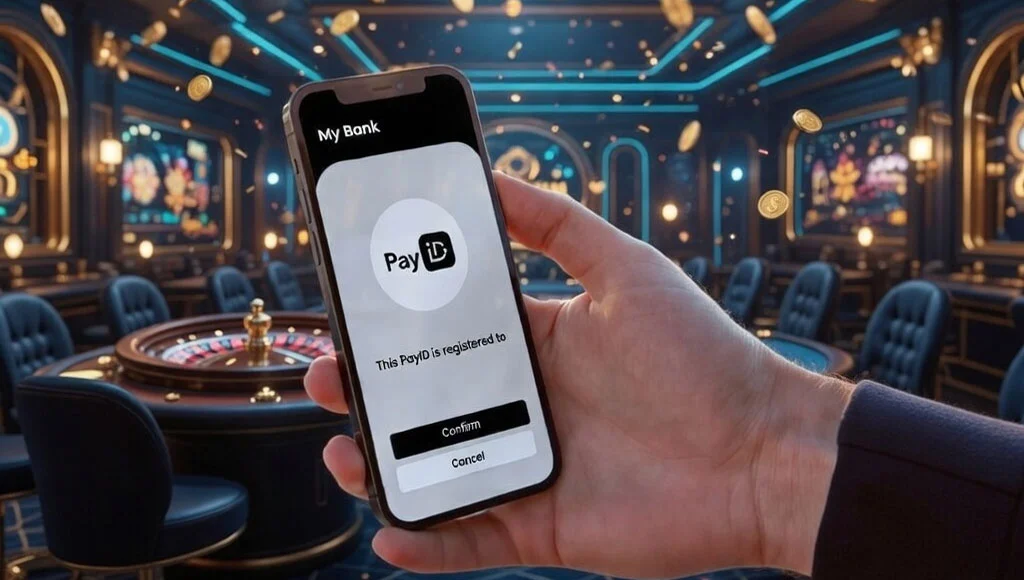
At JokaRoom, this technology acts as a bridge between the platform’s high-performance gaming engine and the user’s personal financial institution. By using a PayID—which can be a phone number, email address, or ABN—players bypass the manual entry of BSB and account numbers. This doesn’t just save time; it removes the risk of “fat-finger” errors where funds are sent to the wrong account due to a single digit typo.

A New Era of Privacy and Protection

Data privacy has become a top-tier concern for Australian digital citizens. Traditional payment methods require users to share their full credit card details or bank account information with every merchant they interact with. PayID changes the architecture of this interaction. It creates a secure “alias” for your bank account, meaning that the merchant only sees your identifier, never your actual banking credentials.

Industry specialists, including the well-regarded Haydee Keller, have frequently pointed out that this layer of abstraction is the future of secure online commerce. When a player uses PayID at JokaRoom, they are utilizing a “Push” payment system. This means the user maintains total control, authorizing the payment within their own banking app’s secure environment before any money moves.

Osko and the 24/7 Economy

The brilliance of the PayID system lies in its 24/7 availability. Because it is built on the Osko protocol, it does not sleep. While traditional bank transfers stop during weekends or bank holidays, PayID transactions continue to settle in seconds.

For the JokaRoom community, this means that the “Friday night win” no longer has to wait until Tuesday morning to reach a bank account. This immediacy has set a new benchmark for what players expect from a premium platform. If a service cannot provide funds at the same speed at which the game is played, it is increasingly viewed as obsolete by the modern Australian demographic.

UX Design and the Mobile Handshake

User Experience (UX) is no longer just about how a website looks; it’s about how it feels to interact with it. The “mobile handshake” between JokaRoom and major Australian banks (like CommBank, ANZ, or Westpac) is now remarkably smooth. When a user selects PayID, the transition from the gaming interface to the banking app and back again is fluid.

This frictionless cycle is critical for maintaining engagement. In the past, the need to find a physical card and enter details was a “bounce point”—a moment where users might get frustrated and leave. By integrating PayID, JokaRoom has optimized the most critical stage of the user journey, ensuring that the transition from account management to gameplay is as short as possible.

Responsible Engagement and Financial Clarity

While speed is a major selling point, the transparency of PayID also aids in responsible gaming. Because PayID is linked directly to a transaction account, it prevents the accumulation of high-interest credit debt often associated with credit card gaming. Users are spending “real” money that they already possess, providing a more grounded financial experience.

Moreover, every transaction is immediately reflected in the user’s bank statement with clear merchant identification. This real-time feedback loop allows for better budgeting and financial oversight, a key component in maintaining a healthy relationship with digital entertainment.

The Future of the JokaRoom Experience

Looking ahead, we can expect the integration between Australian banking APIs and gaming platforms to become even tighter. We are moving toward a “frictionless” future where the financial layer of the experience is almost invisible, allowing the entertainment and community aspects of JokaRoom to take center stage.

The adoption of PayID isn’t just a technical upgrade; it’s a commitment to a player-centric philosophy. By prioritizing speed, security, and simplicity, JokaRoom continues to align itself with the highest standards of the modern Australian digital economy.

A NZ guide to online jackpots: what they are and how they work

NZ guide to online jackpotsJackpots are the dream fuel of online casinos. They promise the kind of win that feels life-changing. But many players jump in without understanding jackpot types, eligibility rules, and why jackpot chasing can quickly become expensive if you treat it like a strategy instead of entertainment.

To compare which casinos actually offer jackpot networks and what kind of games they carry, a broad overview list can help — for example Play Online Casino NZ.

Progressive jackpots vs fixed jackpots (simple explanation)

  • Progressive jackpots: The prize pool grows as players place bets. The jackpot increases until someone wins it.
  • Fixed jackpots: The prize is set at a specific amount and doesn’t grow based on player activity.

Progressives are usually more exciting because they can become huge. Fixed jackpots are more predictable but usually smaller.

Jackpot eligibility rules: the detail that matters

Many progressive jackpots have conditions such as:

  • minimum bet requirements
  • max lines or specific bet settings
  • eligibility tied to real-money spins only
  • restricted play if you’re using a bonus

This doesn’t make jackpots “rigged.” It just means you should know what qualifies before you chase.

Why jackpots feel rare

Jackpots are designed to be statistically hard to hit. That’s what makes the prizes big. If you approach jackpots like a guaranteed path to profit, you’ll likely be disappointed. The healthier approach is:

  • play because you enjoy the base game
  • treat jackpots as a fun extra
  • avoid increasing bets to “force” a win

Choosing a jackpot-friendly casino

A jackpot-friendly platform usually has:

  • reputable providers
  • clear game info and bet requirements
  • stable performance (especially important for high spin volumes)
  • transparent banking and withdrawal policies

If you’re playing for cash and want NZ-facing options to compare, this list is useful: Online Casino Real Money NZ.

Promotions and jackpots: where people get caught

Some bonuses restrict jackpot eligibility or cap winnings, which can clash with the point of jackpot play. If you’re browsing deposit-free offers, compare them here: Top Free No Deposit Casino Bonus — but keep expectations realistic. Many no-deposit deals limit withdrawals, which can make jackpot chasing pointless.

If you’re looking at spins promos, compare them here: Free Spins No Deposit. Just remember:

  • free spins are usually tied to one specific slot
  • winnings often convert to bonus funds
  • max cash-out caps are common
  • jackpot eligibility may be excluded

Smart jackpot chasing (without wrecking your bankroll)

If you want to enjoy jackpot play responsibly:

  • set a strict budget and stick to it
  • use a steady bet size you can afford
  • choose a game you actually enjoy, jackpot or not
  • don’t chase with bigger bets after losses
  • avoid long sessions when tired or emotional

Jackpots are entertainment. The “winning strategy” is keeping it fun and affordable.

Responsible note

Jackpot chasing can be especially addictive because it’s built around hope and near-miss feelings. If gambling stops feeling fun or starts affecting your mood, finances, or relationships, support is available in NZ via the Gambling Helpline on 0800 654 655 or text 8006.

Bottom line: Jackpots can be exciting, but the best approach is informed and controlled. Understand the jackpot type, confirm eligibility rules, and keep your play within strict limits.

CryptoSamba

Hot Off The Press - CryptoSamba Casino


CryptoSamba Casino isn’t just about vibrant slots and thrilling jackpots — it also delivers a solid lineup of classic table games that appeal to players who love strategic, skill-based action.


Among these, blackjack stands out as a perennial favourite, offering a blend of excitement and decision-making that keeps players coming back for more. Whether you enjoy the simplicity of traditional blackjack or want to explore variations like Suit ’Em Up Blackjack and other RTG classics, CryptoSamba’s table game section makes it easy to find a game that suits your style and pace.


The casino’s table game lobby also includes other staples such as baccarat and roulette, giving you plenty of options when you’re ready to mix it up beyond the blackjack table. All of these games run on reliable RNG (Random Number Generator) software, ensuring fair play and smooth performance every time you place a bet.


To help you dive into the action, CryptoSamba offers a Welcome Bonus package that gives new players an extra boost right from the start. You can claim a 150% match bonus up to $150 plus 50 free spins on the Samba Sunset slot with your first deposit, and there’s also a generous $20 no-deposit bonus just for signing up — both of which can help you build your bankroll before hitting the tables.

Maximise Potential Returns

maximize potential returns

So, you have two face cards. With a total of 20, you stand pat, right?

Maybe not. There are plenty of people who would be looking to maximise their potential return.

Splitting is something you can only do after you receive your two cards, and can only be done with identical cards. They don?t have to be completely identical, i.e. two queens of diamonds, just the same rank.

The player has to place a second bet, identical to the first, next to the original wager and the dealer splits the two cards to create a second hand.

Rules of splitting include that there are no blackjacks. If you draw a queen on top of an ace, it?s 21 and not blackjack so you could still end up not winning.

Another standard rule is that if you split aces, you only get one additional card for each split hand.
Just occasionally, you?ll be able to really make the most of your hand by re-splitting. If the cards of a post-split hand are also the same value, you can usually split them again and place a further wager on the new hand.

To take the first example, of drawing two picture cards, the best advice is to stick at 20, regardless of what the dealer holds. You have a good chance of winning with that hand, whereas you don?t know what you would get with the split hand.

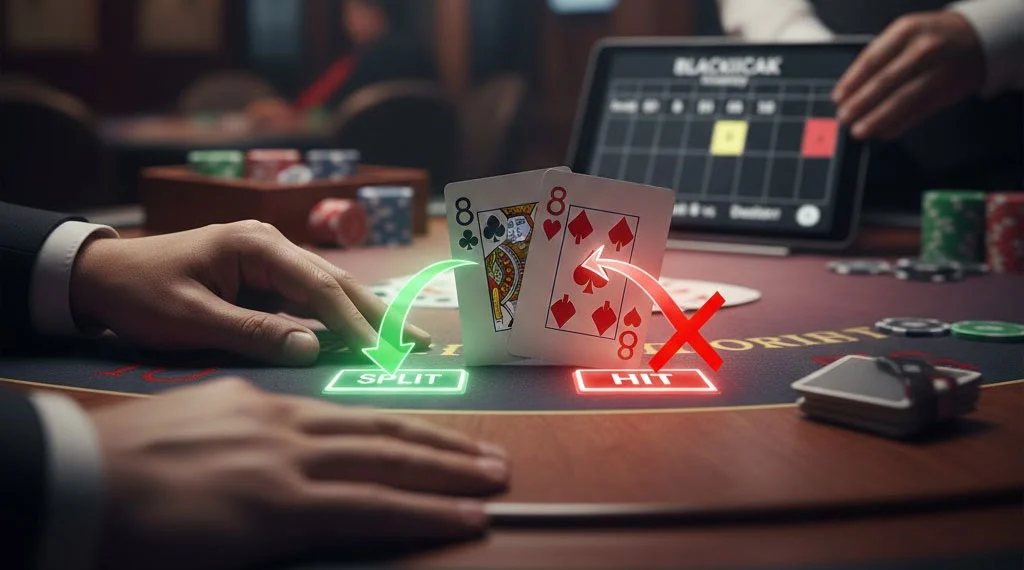
There is an almost universal rule: always split aces and eights. Because of the number of picture cards in a deck, your chances of getting 21 with your split hands is pretty good.
Eights are split not because they have great potential of winning, but because 16 is a lousy total to play with.

There are tables available online that can teach you when to split, when to stick and when to hit. It?s useful to memorise these guidelines if you?re playing in a physical casino, whereas you can always have them open in another window when you?re playing online.

Written by Alex Corcoran, online bingo fan, gaming expert and online features writer, specialising in casino games such as poker, craps and Blackjack.

Five Worst BlackJack Rules

Quick, can you tell me what are the five worst playing rules for blackjack? If you don’t know them then the next time you play blackjack you might just be bucking higher than normal odds. So let’s review these bummers to be sure you never play in a game that has them.
Blackjacks pay Even Money

This one stinks. Normally the casino pays 3 to 2 when a player gets a blackjack hand (and the dealer doesn’t also have blackjack). Getting paid 1 to 1 may not seem like a big deal but it is because the casino’s edge goes up by 2.3% (ouch).

Normally blackjack games that offer an even money payoff also have several other player favorable rules as a come on. A good example is SuperFun 21, which is offered in many casinos in Las Vegas. The game uses only a single deck of cards with liberal rules such as surrendering anytime including after hitting, doubling, or splitting. But the liberal rules do not come close to negating the 2.3% edge the house enjoys when it pays even money on blackjack hands. The bottom line is be very cautious when a casino only offers even money on a blackjack.
Blackjack pays 6 to 5

Oh come on, no casino would pay 6 to 5 for a blackjack hand you say? Well guess what? Walk up and down the strip in Las Vegas and you’ll find this game all over the place. The come on is that it’s advertised as a single deck game, which usually implies a good game for the player. But getting paid 6 to 5 on a blackjack is a much worse deal than getting paid the normal 3 to 2. How much less? For every $10 you bet and get a blackjack you’ll get paid $3 less. This increases the house edge by 1.2%.

What’s ironic is that these same casinos that offer this 6 to 5 abomination game also offer plenty of multiple deck games with a much lower house edge (partly because blackjacks are paid at the standard 3 to 2). Yet the last time I visited Las Vegas I observed all the 6 to 5 single deck tables packed with players while the multiple deck tables where much less crowded. I finally asked one player who had quit playing the 6 to 5 single deck payoff game why he choose to play it rather than the better multiple deck game. His response was that he thought 6 to 5 was a better payoff than 3 to 2. So much for the math skills of the average blackjack player (which is probably why the casinos in Las Vegas are blazingly getting away with offering this game to clueless tourists).
Doubling Down only on 11 or 10 or just 11

Often you’ll see this rule in single deck games where a player is restricted to doubling on a two card 10 and 11 (or just 11). This means you can’t double down on 9 or any soft hand (that’s not good). The house edge goes up by about 0.7% when you can only double on 11 and by 0.25% when you are restricted to just doubling on only 10 and 11.
Using 8 decks of Cards

Compared to a single deck game, the casino’s edge increases by 0.61% when 8 decks of cards are used. You would need several liberal rules to offset the 0.61% edge to make the game playable. At the minimum make sure the dealer stands on soft 17 and doubling after pair splitting is offered (ideally also late surrender).
Dealer Hits Soft 17

Many casinos (especially on the Las Vegas strip) have changed the dealer rule regarding soft 17. It used to be pretty standard that dealers must stand on all 17 hands (which includes a soft 17 hand). Nowadays, however, more casinos are changing to hit soft 17. That’s not a good change for the player because the casino edge increases by 0.20%. Given a choice you are better off playing where the rules require that dealers must stand on soft 17.

Probably the worse blackjack rule that I ever saw was dealer winning all ties. Yes, I know that’s the way you play it with your buddies when you get together for a friendly game of blackjack and poker. But in a casino, you should never play any blackjack game where the dealer wins ties. The standard casino rule is when your hand totals 21 or less and the dealer ends up with the same total, it’s a tie or push and you don’t lose or win your bet (but remember that a dealer blackjack hand beats a player’s three or more cards 21 hand). By winning tied hands the casino edge zooms by about 9%.

There are two things to keep in mind when you play blackjack. First, there has never been a game with exotic rules that has a lower house edge than the standard game. So before you decide to try a SuperFun 21 or other ‘new’; game you better check the rules.

Secondly, you should always try to pick your games carefully so that the overall mix of rules leads to a casino edge that’s as low as possible for the game you are playing (this of course assumes you know the basic playing strategy – if not, learn it!).

Dan Pronovost showed the effect of each rule on the house edge in his excellent article, Picking the Right Game, that appeared in issue #35 of the Blackjack Insider Newsletter (www.casino.com/newsletter/blackjack/archive/). This article is a good starting point to be sure you understand the impact a rule has on the house edge.

Often casinos will introduce new rules or games in their blackjack pits. An example is the new game Blackjack Switch, which recently had a trial run in Atlantic City and will soon be launched in casinos there and in Las Vegas (it’s also offered on the Internet). In this game you must play two hands and you are allowed to switch the two top cards. That very favorable player rule is offset by this new rule – when the dealer has 22, all player hands of 21 or less push (instead of win). So is the favorable switch rule offset by the very unfavorable push 22 rule? The answer is I don’t know at the moment but I’ve got several blackjack mathematicians working on this as we speak to determine the overall impact on the player (we hope to have it all unraveled in the next issue of the Blackjack Insider Newsletter).

That’s it for now. Stay positive and make sure you know the rules before you play.

By Henry Tamburin

Blackjack Player Options

Standing
The player elects to “stand” with the current total and not to draw any additional cards. If you are in a game where the cards are dealt face-down, you slip your cards under your chips. The dealer will understand the message. If you are in a face-up game, wave your hand back and forth in a wiping motion just above your cards, which is the signal for standing. All casinos insist on some form of hand signal; verbal statements are not accepted. Casinos can get rather noisy, and it is easy for a dealer to mishear a player. Also, the cameras hidden in the casino’s ceilings can be used to resolve disputes only if hand signals are used, since they do not have an audio component.
Hitting
The player elects to draw an additional card or cards. If you are in a face-down game, draw your cards toward you with a quick scratching motion against the felt once or twice. In a face-up game, make a similar motion with your fingertips or , preferably, point to your cards with your index finger.
Splitting
If your first two cards are of the same value, you may split them and play each as a separate hand. To indicate a desire to split your cards, place an additional wager equivalent to the original one to the side of it. If you are playing in a face-down game, you must expose your cards. After splitting a pair, various other options become available. You can re-split if a third like-valued card appears. Or you can double down on the split hands should an appropriate card be drawn. For example, if you have split 8’s and catch a 3 on the first 8, you may now double down on this total of 11. Both re-splitting and doubling and doubling down after a split are to the player’s advantage.
Doubling Down
The player may double the size of the original bet and elect to draw only one additional card. The typical doubling situation is where you have a hand that stands a chance of becoming a _very_ good hand with one additional card; for example, your first two cards total 10 or 11. To indicate a double down bet, slide a second wager to the side of the original bet. This wager may be as much as but no more than your original bet. If you are playing in a face-down game, you must expose your cards. Virtually all casinos permit doubling on 11 and 10; most on 11, 10, and 9, and many will allow it on any two cards. The latter rule is the most advantageous to the player.