Search Results for: casino slot

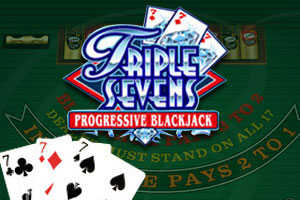
Triple 7’s Blackjack

Triple 7's BlackjackBlackjack fans will like this version of the game from Microgaming with the opportunity to grab the Progressive jackpot. The standard blackjack rules apply but you have to make a mandatory $1.00 triple 7?s side bet.

You of course play to beat the dealer on 21 but the real objective of this version is to get consecutive 7?s. There are 5 decks of cards which are re-shuffled after every game so the 7?s are there!

The rewards for 7?s are as follows

  • Two consecutive 7?s of mixed suits wins seven credits
  • Two consecutive 7?s of the same suit wins fifty credits
  • Three consecutive 7?s of mixed suits wins two hundred and fifty credits
  • Three consecutive 7?s of the same suit wins one thousand credits
  • Three consecutive 7?s of diamonds and you win the Progressive jackpot

It is worth noting that even if you lose against the dealer on 21 you still win your credits on 7?s

Play Triple 7’s Blackjack now at:

Disclaimer

Please read this important information before gambling at any online casino as it is your responsibility to ensure online gambling is legal in your country of residence.

  1. Gambling – This site disclaimer is for online casino and general gambling information purposes. You can not gamble on this site.
  2. Information – We will attempt to keep all our information up to date. The online casinos do, however make changes to their bonus offers and terms and conditions. No online casino will be bound by the terms of an outdated advertisement or promotion, we cannot be held liable for having any outdated information on this site. We strongly advise that you check through the casino site before playing to ascertain the casinos current terms and conditions.
  3. Legality – Gambling may be illegal in certain jurisdictions or countries. We cannot determine the legal status of online gambling for each site visitor. We would suggest that you check with your local authorities before gambling online. We also have no control as to the Registration, Country, jurisdiction, location of any person/s who partake in online/interactive gambling.
  4. South African Online Gambling – The current status is that interactive gambling from within the Republic of South Africa is illegal. Whilst we promote the Rand currency – this is for players outside of South African borders wishing to gamble in Rands. Furthermore – In terms of the Exchange Control Rules, it is illegal for South African residents to participate in foreign lotteries, sweepstakes and betting organizations.
  5. South African Rand Currency – Our advertising of the South African Rand (Zar) currency is intended for those countries trading/utilising the South African Rand (Zar) currency and for use by person/s outside of South African Borders. The Rand (Zar) currency is not for use by person/s residing in South Africa to partake in online/interactive gambling.
  6. South African Free Play Registration – You can register for free play as entertainment purposes only, you can not deposit money. Inorder to register for Free Play, you still need to download the casino software and complete the Free Play registration.Media informs you that the new proposed bill to regulate online gambling in South Africa will be submitted to the State President for signing. Once the State President has signed, online gambling will then be legal and regulated in South Africa!The only legal forms of gambling in South Africa as per the National Gambling Board notice number: 002/2007 – 16 April 2007 are the following:
    1. Betting/wagering with licensed operators.
    2. Online betting or wagering is permitted with licensed operators.
    3. Bingo conducted by licensed operators within the Republic.
    4. Casino land based gambling conducted by licensed operators within the Republic.
    5. Limited payout machines conducted by licensed operators.
  7. Age – It is illegal for persons under 18 years of age to gamble.
  8. Player Identification – This site www.bigstackblackjack.info, in accordance with all Online Casinos privacy policy/terms and conditions, does not obtain or have any access to any player/s identification or casino account details. This is private information kept by the casino only.
  9. Gambling Problem – There are a number of signs that indicate problem gambling. One of The biggest signs is when you find yourself losing more than you can afford to lose. Your online casino can help by locking your account, (you can email them to request this ) If you think you may have a problem, find the support you need at the links below:
  10. Liability – We have used whatever means we have at our disposal to try and list only those casinos who have the ability to honor their commitments. We don?t have insight into their financial status and thus will not be held liable for their actions.
  11. Arbitration – We are totally independent to any of the online casino/s, nor do we have any ownership or share holding/s with any online casino/s. Should you experience difficulty in your dealings with any of the casinos listed, we will happily provide whatever support at our disposal in an effort to resolve your dispute.
  12. Casino Rules – We remind you that online casinos have terms and conditions/rules and that it is your responsibility to familiarize yourself with the casinos rules before playing there.
  13. Welcome Bonus – Most online Casinos offer new players a welcome bonus. There is a play through requirement that the player must play before the player may cash in. The play through requirement will vary from casino to casino, we therefore advise you to read all terms and conditions including any terms and conditions relating to play through requirements.

In case you’re interested in knowing more info on online slots, stop by www.casinobonusmaster.com

Splitting in the game of Blackback

There are four options available to the player in a game of Blackjack once he has been dealt his starting cards. One these is to split but what exactly does this mean?

Sometimes when you are playing Blackjack you will be dealt a pocket pair such as 88, 66, 44, etc. When you are dealt a pocket pair you have the option to split. Splitting means that you divide the two cards into two separate hands. The dealer then deals you two separate cards, one to each hand, giving you the net result of two hands instead of one. When you decide to split you also have to double your wager because you are now betting on the outcome of two hands. Anyone who is unsure as to what they’re doing may be better off sticking to video poker instead.

The number of times that you are allowed to split your hand will depend on the rules of the particular casino you are playing in. Imagine you have two eights and decide to split and the dealer deals you another two eights; in some casinos you will be able to split the two eights again giving you the net result of four hands. As you can imagine the splitting of hands can win or lose you a lot more money than you initially bargained for, but it is one of the most exciting parts of the game. Remember, Blackjack has just as many nuances as slot games.

Another rule variation you need to look out for when splitting is when you are dealt a pair of aces. Some casinos will not allow you split aces, others will only allow you to draw one additional card on each ace and some will not recognize an eventual 21 as a 3:2 Blackjack hand. It’s important to bear these things in mind before you start.

Play Blackjack Professionally

If you don’t have much Blackjack experience, it can be daunting stepping up to the tables for a game. You can, however, hide the fact of your inexperience very simply by remembering these straightforward rules. (Note – the rules of BlackJack will differ from area to area and from casino to casino, but the general principles are the same. When in doubt, ask!). A typical BlackJack table seats a dealer and up to 7 players. Starting with the dealer, the first seat on his left is ‘1st Base’, while the first seat on his right is referred to as 3rd Base. In front of each player’s seat is a betting square, printed on the felt. Right in front of the dealer is the chip tray, while on his left is the deck (a.k.a. shoe) and next to that is the’ minimum bet sign’, which tells you how ‘expensive’ the table is. As a beginner, you will want to stick to the low bet tables to keep any losses under control. On the dealer’s right is a money drop slot. This is a security feature – casinos don’t really trust their employees, and all cash and chips are deposited here to prevent ‘leakage’.

Next to the drop slot is what’s known as the ‘discard tray’. Play starts after the dealer shuffles the cards, the deck is ‘cut’ by a player using a ‘marker card’ (NOT the bare hand), and finally the dealer ‘burns’ a card (or throws it away in order to ensure randomness). Before the cards are dealt, you make your bet by placing chips or cash into the betting box. Be aware that you can sit out a hand or 2 if you like – maybe you need a break, or the dealer is just on a lucky streak. Note that if the casino is busy, you may be asked to give up your seat so another punter can take your place (or alternatively resume the game yourself). If you really don’t want to play, just get up and vacate the seat – you can always come back later!

When all players who want to play in this round have placed a bet, 2cards will be dealt to each player going from left to right. Some casinos deal the cards face down. Elsewhere the cards are dealt face up, in which case NEVER touch them – the assumption if you do is that you are cheating! The dealer deals himself 2 cards – 1 down and 1 up. Card values are, as everyone knows, 10 Jack Queen and King are worth 10, an Ace is worth 1 or 11, all other cards are worth their face values. In noisy casinos, be prepared to use hand signals to indicate whether you want to hit or stand.

How do you indicate ‘hit’? If the cards are dealt face down, flick the cards gently across the felt 2 times. If the cards were dealt face up, point at the cards with your finger in a jabbing style. You can nod your head to emphasize the desire for a hit. If you’d prefer to stand, move your hand horizontally from left to right (palm down) to indicate ‘no’. Always keep your hands a few inches off the table to avoid suspicion. If you like, you can emphasize the stand by shaking your head ‘no’ at the same time.

Should you play single or multiple deck games? Only in Vegas do they still play single deck, and the tables are usually full – it is much easier for amateurs to ‘count’ in a single game, and keep the odds pretty fair, which explains their popularity. Multiple deck games will usually be based on even number of decks (up to 8 decks in the shoe at a time). Multiple decks allow the dealer to deal more hands per hour (less shuffling etc), which makes them more profitable for the casino, and they reduce the chances of a player ‘counting’. Dealers HAVE to follow straightforward rules, and must hit if they have 16 or less. On the other hand, if the dealer has 17 or more, he MUST stand, except in some smaller casinos, where he can hit on a ‘soft 17’.

You as the player can do anything you like, standing or hitting as it suits you. If you get a BlackJack (an Ace and a ten right off) you win 1 and a half times your bet. You can only double down on 2 card hands totaling 9, 10, or 11 (a very few casinos allow doubling on any 2 card hand). If your cards were dealt face down and you want to double, turn them over and put them on the dealer’s side of the betting square. Otherwise point to them and say ‘double’ when it’s your turn. You will have to put an equal amount of chips next to those already in the betting box (NEVER put new chips on top of old chips – it looks like cheating!). You will get one new card.

Splitting is kind of similar – cards dealt face down need to be turned over and placed them a little apart. Otherwise point at them and say ‘split’ when it’s your turn. Place an equal amount of chips in the betting box near the other card (remember, NEVER on top). You are now playing 2 hands exactly as normal (unless you just split two aces in which case you only get one card – a 10 would be good!. If it is a 10 the hand isn’t a BlackJack, meaning you only get the standard odds of 1/1 and not 1/1.5 as you would for a ‘natural’ BlackJack. Be careful how you split – it is possible to end up with 4 or 5 hands simultaneously! Likewise, it’s probably not good to split two 5s – you will be replacing a hand that is great for drawing on or doubling down on with (probably) 2 poor hands. Insurance only happens when the dealer’s face up card is an Ace, when the dealer will ask the players if they want insurance (he won’t know what his face down card or ‘hole’ card is at this point, so you won’t be able to read his expression for clues). Insurance means that half the player’s bet is placed on the ‘insurance’ semicircle printed on the felt. If the dealer gets a BlackJack the player wins the the insurance bet but loses the original bet meaning a zero hand because insurance pays 2 to 1. If the dealer does not get BlackJack, the insurance bet is lost and the hand is played normally with the remaining half bet. Don’t bother with insurance unless you are trying to card count (take it when the number of non ’10’ cards to 10s drops below the 2 to 1 margin). You may also come across ‘Surrender’ – it’s not widely used, but there are 2 versions you may find, ‘early surrender’ and ‘late surrender’.

Early surrender means quitting on 2 card hands if you don’t like the dealer’s up card (e.g. a ten or court card). Surrendering in this way will give you a small extra advantage whcih is why casinos don’t like it. Late surrender means waiting until the dealer checks for BlackJack, at which point if he doesn’t, you may decide to surrender. As we say, not very common, so ask before joining the table whether you can or not. And that’s it! Stay cool, and don’t panic, and nobody will guess you are a casino newbie!

Online Gambing Addiction – Play Safely

Can you imagine being able to place a bet with just a press of a button? Can you imagine playing and betting as long as you want?

Can you imagine gambling from the comfort of your own home?

We know for a fact that gambling is risky business, and unrestrained gambling is just asking for trouble. Compulsive gamblers already have a hard time restraining themselves from the call of casinos and bookies, and now Internet gambling just takes the ante a step further.

With Internet gambling, you don?t need hard cash. Everything that is online is so easy to access. Play Baccarat, Blackjack, Craps, Keno, Roulette or Slots. Play all day, all night.

Before the 1990s, gamblers who wanted to place a casino or sports type bet in the United States basically had two choices: they could travel to a legitimate brick-and-mortar gaming establishment or place an illegal wager through a bookie. However, with the emergence of the Internet in the mid-1990s, a new form of gambling appeared; Internet gambling through gaming casinos and sports wagering. Internet gambling can take place on any electronic device that offers Internet access anywhere on the globe.

Internet gambling makes payment options for gambling individuals easy. They can just choose from several types of payment options other than credit cards. These include:

VISA and MasterCard cards: These cards are tied directly to the cardholder’s bank account. Funds for all transactions are deducted directly from the cardholder’s bank account, but cardholders can make credit card-type transactions that do not require a personal identification number.

Private-label debit cards: These cards are similar to check cards above but are issued by private companies rather than credit card associations.

On-line payment providers: These companies send and receive funds electronically for such uses as on-line auctions and purchases.

Wire transfers: Some Internet gambling sites promote this method of payment, which allows Internet gambling customers to wire money directly from a bank account to the site.

?E-cash? or digital cash: It is a digital representation of real money that can be placed on a computer hard drive, smart card and other devices with memory. It can be purchased from an authorized provider.

Internet gambling sites also offer money orders; traveler?s checks; bank drafts; cashier?s, certified, and personal checks; and a number of other electronic banking systems or processors as payment options. With Internet gambling?s easy payment options, even a non-gambler would be tempted to try.

Statistics also show that Internet gambling has nearly doubled every year since 1997 ? in 2001 it exceeded $2 billion. It also boasts 110 sport-related Internet gambling sites.

According to the American Psychological Association, Internet gambling could be just as addictive as alcohol and drugs.

This is a confession from quoted from The Gambling Problem Talking Point website:

?? I am addicted to online poker, not to mention soccer betting and casinos whenever I am in the vicinity of one.

For the longest time I thought I had the beast under control. Thought I was smarter than the pack, and shrewd enough to beat the pack. Considered my betting to be more of an investment than anything else.

How much have I lost gambling? I am afraid to tally.

Has it ruined my life? Almost ? I guess being from a wealthy family, it helped me to cover the tracks not to mention the losses.

Is Blackjack a ?Winnable? Game?

When blackjack first became a casino staple, it was assumed that it was rather like baccarat, where the house, by virtue of the rules determining play, had a statistical edge. All players and students of the game assumed that this advantage existed based on two simple facts. One, the player had to act first. Two, all busts (hands totaling over twenty-one) were losers no matter what the dealer later drew. These two rules seem to give the house an incontrovertible edge.
Conventional began to change in 1956 when a paper by Baldwin, Cantey, Maisel, and McDermont was published in the _Journal of the American Statistical Association_. This paper and a black-jack strategy manual published by Baldwin et al. the following year both attracted very little interest among non mathematicians, but it would prove to be the first step toward determining that blackjack is a “winnable” game.
Edward O. Thorp, a scientist at MIT, did understand the implications of the work of Baldwin and his colleagues and began to ex-amine two elements of the game that were previously unexamined. One, the composition of a deck of cards changes with every card dealt. Two, some deck compositions favor the player and other favor the house. In 1962, Thorp published his now famous book, _Beat the Dealer_, which contained a simple yet profound mes-sage. Unlike dice, roulette wheels, and slot machines, decks of cards have “memory.”
Blackjack, unlike Roulette for example, is a winnable game be-cause of this “memory.” Let’s look at an example. You are sit-ting at the Roulette table and the dealer throws the ball and it comes to rest on the number 9. Now, when he throws the ball again for the next round, what are the odds the ball lands on 9 again? Assuming the wheel is not rigged or the dealer is not trained to “fix” the outcome, the odds of the ball landing on 9 again are exactly the same! Let’s take it a step further. Assume that the ball does indeed land on 9 again – twice more. Now the ball has landed on the 9 three times in a row! What are the odds this happens a fourth time? Exactly the same! There is no statistical reason that the ball should “avoid” landing on 9 again.
Blackjack is different. Let’s look at a similar situation in blackjack. You are at the table with two other players. The dealer deals a 9 to each of the players at the table. Now the odds of dealing another 9 have been significantly reduced. In a six deck game the odds have been reduced from 3:49 to 7:104. This fact alone makes blackjack a winnable game.