Search Results for: Double

Mastering the Deck: A Local’s Guide to King Johnnie Online Blackjack Australia

Mastering the Deck: A Local’s Guide to King Johnnie Online Blackjack Australia

For Australian players seeking a blend of urban grit and high-end gaming, the neon-soaked corridors of “Spin City” provide a familiar yet exhilarating backdrop. While the platform offers a massive array of entertainment, it is the strategic depth of the card tables that truly defines the experience. When it comes to kingjohnnie online blackjack australia, players are discovering a world where skill, patience, and the right environment collide to create the ultimate “21” experience.

The Australian Affinity for Blackjack

In the local gaming culture, “Blackjack” (or simply “21”) has always held a position of prestige. Unlike pure games of chance, blackjack appeals to the competitive spirit of the Australian player—the desire to outsmart the house through logic and mathematical discipline. King Johnnie caters to this demographic by providing a platform that is both aesthetically pleasing and functionally superior.

The site’s dark, sophisticated “Spin City” theme isn’t just for show; it creates a low-distraction environment that is perfect for those who need to maintain focus while counting cards or calculating the probability of a dealer bust.

Exploring the Variants: Beyond the Standard Game

The beauty of playing at an online destination like King Johnnie is the sheer volume of choices. While a land-based casino might only offer one or two versions of the game, the digital lobby is packed with variants that offer different house edges and side-bet opportunities.

European vs. American Blackjack

For many players in the region, the choice between European and American rules is the first major decision. In European Blackjack, the dealer does not receive their second card until after the player has finished their hand. This subtle shift changes how you approach “doubling down” or “splitting,” especially when the dealer shows an Ace. King Johnnie provides both, allowing players to choose the rule set they are most comfortable with.

Single Deck Perfection

For the purists, Single Deck Blackjack remains the “Holy Grail.” By using only 52 cards, the variance is reduced, and the player can more easily track which high-value cards have left the deck. King Johnnie’s single-deck variants are optimized with crisp graphics and smooth animations, making every deal feel authentic and fair.

The “Spin City” Technical Advantage

Navigating a digital casino requires a platform that is as reliable as it is fast. The infrastructure supporting the blackjack games at King Johnnie is built for high-performance gaming.

  1. Instant Play Interface: There is no need for bulky downloads. The games load directly in your mobile or desktop browser using HTML5 technology.
  2. RNG Transparency: Every virtual hand is governed by a Random Number Generator that is regularly audited, ensuring that the shuffle is as unpredictable as a physical deck.
  3. Cross-Device Continuity: You can start a session on your desktop and finish it on your smartphone during your commute without losing your place or your balance.

Strategies for the Australian Player

To make the most of your time at the tables, it is essential to approach the game with a plan. Australian players often favor “Basic Strategy,” which is a mathematically proven chart that tells you exactly when to hit, stand, double, or split based on the dealer’s up-card.

At King Johnnie, the interface is designed to be intuitive, allowing you to see your total count clearly and making the action buttons prominent to avoid accidental clicks. For those looking for bigger payouts, many tables offer “Perfect Pairs” or “21+3” side bets. While these have a higher house edge, they offer the chance for significant multipliers that add an extra layer of excitement to every round.

The Social Hub: Live Dealer Tables

No discussion of the modern blackjack experience is complete without mentioning the Live Dealer lounge. This is where the city truly comes alive. Real dealers, real cards, and real-time interaction create a social atmosphere that rivals any physical casino floor in Sydney or Melbourne.

The live stream is optimized for local bandwidth, ensuring a lag-free experience where you can see every flick of the wrist. It’s the perfect way to enjoy the “Johnnie” lifestyle from the comfort of your own home, complete with a professional atmosphere and the chance to chat with fellow enthusiasts.

Conclusion: Take Your Place at the Table

Whether you are a seasoned “advantage player” or a newcomer looking to learn the ropes, the blackjack offerings at King Johnnie provide a world-class environment tailored for the Australian market. With a focus on security, variety, and a unique urban theme, it is clear why so many are heading to Spin City to test their luck against the dealer.

The cards are on the table and the dealer is waiting. Are you ready to hit or stand?
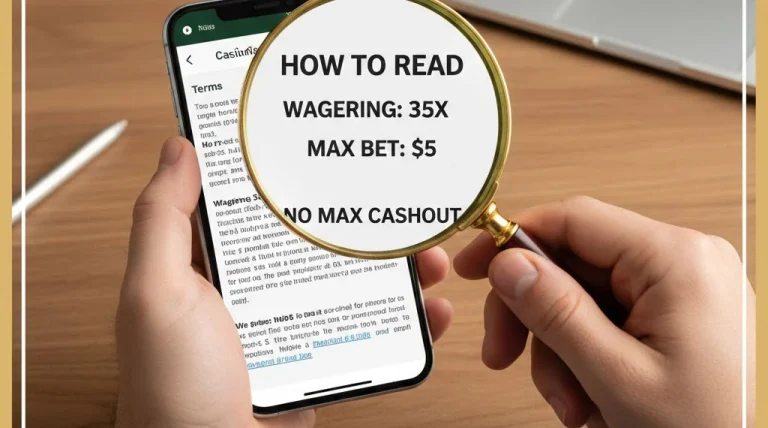
How to Read Casino Bonus Terms Fast (Without Feeling Like You Need a Law Degree)

how to read casino bonus terms

We have all been there. You see a flashy banner promising a $500 bonus, you click through, and you are immediately greeted by a wall of text that looks like a mortgage agreement. Most New Zealand players simply scroll to the bottom, click “I Accept,” and hope for the best. Unfortunately, that is exactly how players get “stung” by hidden clauses.  If you want a shortlist, start here: low-minimum deposit online casinos.

The good news? You don’t need a law degree to protect your bankroll. You just need to know which four things to look for. If you can spend two minutes scanning for these specific terms, you can avoid 99% of all casino bonus traps. Here is your “speed-reading” guide to bonus terms.

1. The “Wagering” Multiplier (The Heavy Lifter)

This is the most important number in the entire document. It tells you how much work you have to do before the money is yours.

What to look for: Look for a number followed by an “x” (e.g., 35x, 40x, 50x). The Speed Check: * 35x or lower: Excellent value.

  • 40x to 50x: Average/Standard.
  • Over 50x: Approaching the “danger zone”—it will be very difficult to walk away with cash.

The “Lawyer” Catch: Scan for the phrase “Deposit + Bonus.” If the wagering applies to both, the “real” requirement is effectively doubled. Always prefer offers where the multiplier applies to the “Bonus amount only.”

2. The “Game Weighting” Table (The Progress Killer)

Not all games are equal. If you spend an hour playing a game that doesn’t count toward your wagering, you are effectively spinning your wheels.

What to look for: Look for a percentage table or a list of “Excluded Games.” The Speed Check: * Pokies: Usually 100%.

  • Table Games (Blackjack/Roulette): Usually 5% to 10%.
  • Live Casino: Often 0%.

The Pro Tip: If you see a long list of “Excluded Pokies,” check if your favorite game is on it. Casinos often exclude high-RTP (Return to Player) slots because they make it too easy for players to beat the wagering requirements. For slot promos and comparisons, see NZ free spins promotions.

3. The “Max Bet” Rule (The Silent Account Killer)

This is the clause that gets the most players banned or their winnings voided. Almost every bonus comes with a maximum amount you can bet per spin.

What to look for: Search for the “$” symbol and the words “Max Bet” or “Maximum Stake.” The Speed Check: In the NZ market, the standard limit is usually $5.00 or $7.50.

The Trap: If you have $100 in your account and you decide to do one “big” spin of $10, you have technically breached the contract. Even if that $10 spin doesn’t win, the casino can use that breach to void all your future winnings from that bonus. Stick to $2 or $3 spins until the bonus is cleared.

4. The “Max Cashout” Cap (The Ceiling)

Imagine turning a $10 bonus into $2,000, only to be told you can only withdraw $50. This is the “Max Cashout” trap.

What to look for: Search for “Maximum Win,” “Capped Winnings,” or “Withdrawal Limit.” The Speed Check: * Deposit Matches: Should ideally have NO max cashout. If you are depositing your own money, you should be able to win an unlimited amount.

  • Free Spins/No Deposit: These almost always have a cap, often between $50 and $200.

The Strategy: If you see a very low cap (like $20), don’t waste your time. The effort required to clear the wagering isn’t worth a $20 payout.

The 2-Minute Scan Summary

Next time you open a T&C page in the Canvas of a new site, don’t read it like a book. Use Ctrl+F (or ‘Find in Page’ on your phone) and search for these four keywords:

  1. “35x” (Wagering)
  2. “Weight” (Game percentages)
  3. “Max Bet” (The $5 limit)
  4. “Cap” (Max withdrawal)

If these four numbers look fair, you are good to go. If any of them are missing or look predatory (like 70x wagering), it’s a signal to close the tab and find a more player-friendly operator.

Why It Matters

Casino terms aren’t there to provide a fun reading experience; they are there to protect the house. By learning to navigate them quickly, you move from being a “target” to being a “player.” You wouldn’t sign a car loan without checking the interest rate, so don’t accept a bonus without checking the playthrough. Speed-reading the terms isn’t just about safety—it’s about giving yourself the best possible chance to actually see a “Withdrawal Successful” message.  If you’re weighing trial offers, read no deposit bonus offers for Kiwis.

Find the Best Blackjack Casinos

why blackjack
Taking a closer look at blackjack casino reviews and how find the best blackjack casinos.

Blackjack is Popular at all Casinos

Blackjack is often easily identified as one of the most popular games at any casino. Whether you play in casinos online or in land based properties such as those in Las Vegas, the blackjack tables will always have a lot of action.

Why is Blackjack the #1 Game

The most logical reason that blackjack is so poplar at casinos is the lower house edge.

Besides slots being one of th larger driving forces in casinos, no doubt players love to play blackjack. If a player learns and follows the rules closely they actually have a good chance of leaving the table with a profit.

Different Blackjack Variants

Another thing that draws some players to the game of blackjack are the many variations of the game. Not only is there classic forms but quite a number of other variants you can play. Below are just a few:

  • Classic Blackjack
  • Atlantic City Blackjack
  • Perfect Pairs Blackjack
  • Blackjack Switch
  • Suit ’em Up
  • Rolling Stack
  • Pontoon

The above list is just a few and there are many more.

Blackjack Strategy a Key Point

Whether a player leaves a blackjack table with more money then when they sat down revolves on their strategy during play.

Did you split or double down when you should have? Have you stood and not taken a hit compulsively when the strategy charts said you were supposed to?

More than Strategy Required

Beyond following good and sound strategy when you play blackjack, it is also important where you play.

You need to be sure you play at honest and trustworthy casinos. Always be sure the site you are using for recommended blackjack casinos to try are research their background and only listing reputable operators. You want to make sure where you play is just as important how you play.

How to Find the Best Blackjack

In order to find the best online blackjack casinos, be sure you are doing your homework. Be sure to read the many reviews at blackjack casino portals such as this one.

Additionally, be sure to check out Blackjack World for the many blackjack casino reviews. They also have reviews of various software developers, some of the specific game types and variants as well as other tips and article blackjack players will enjoy reading.

KTO Casino & Sportsbook

KTO Casino & Sportsbook first appeared on the gaming scene in 2018, and have become one of the top casinos and sportsbooks around.

Not only do they offer a great sportsbook that will impress even the most seasoned sports betting punter, but their casino offering is also not to be sneezed at!

Offering over 4000 quality casino games, ranging from video slots, table games, video poker, virtual betting & skill games all from top providers like NetEnt, Pragmatic Play, Oryx, Fugaso and many others (33 in total), players are most definitely spoilt with choice.

KTO Sportsbook

KTO’s sportsbook offering is one of best we’ve ever seen, with not only a wide range of betting markets for punters to choose from, but with some of the best odds we’ve seen at any sportsbook on the net.

Not only do they list popular events, they even have some of the less well known markets available to bet on. A few examples are League of Legends, Call Of Duty, StarCraft 2 and other massive multiplayer online games. You can even bet chess games…

What also tickled our fancy was the various views that punters can utilise. Choose between the “normal” dashboard where all the information is displayed in a four column view, Event View where an even can be chosen on the left, and all the available bets with their odds  are displayed in the center column – the bets and odds are even updated in real time as the event unfolds.

Punter who want to keep an eye on multiple events can use the Live Multiview, from here punters can “add” various events from the left panel to display in the center column, all with their latest bets and odds.

The last two views are Live Calendar and Results. The Live Calendar view displays a calendar-like view where punter can view current and upcoming events, neatly organised by date and time. Results view is where punters can go to check up on what an events outcome was – all easy filterable and sortable by using various dropdown filters.

KTO Casino Welcome Bonus

KTO Casino 1700 welcome offerKTO hasn’t kept back on their Casino player welcome bonus either – New players at the casino get up to €/$1’700 over their first 3 deposits. And with a low 25x times wagering requirement it is nothing to sneeze at. Unfortunately for us blackjack players, the welcome bonus funds can only be wagered on slots – but that’s no biggie, as the slots on offer will entice even the most hardened blackjack player.

Blackjack Games at KTO

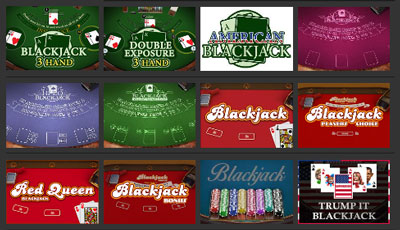
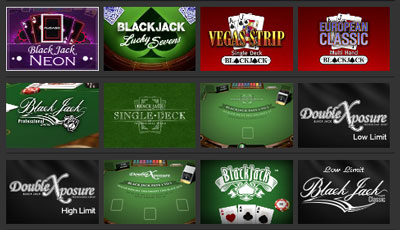
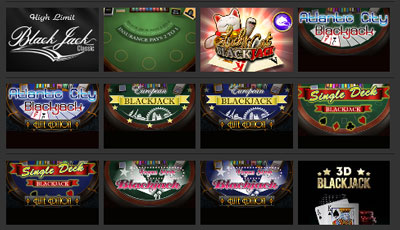
KTO Casino offers a variety of Blackjack games that will please any blackjack player. At the time of writing this there were over 36 different blackjack games to play, ranging from classic classic Blackjack to exotics like Lucky Cat Blackjack and even a 3D Blackjack.

The blackjack games are also not all single hand blackjack games, players that can keep track of multiple hands will most definitely enjoy Habanero’s Blackjack 3 Hand or Double Exposure 3 Hand.

Think you know your Blackjack stuff – try out the Professional Blackjack Series games by NetEnt. Choose between the Low or High limit options available, and play Blackjack like a pro! Or try out the Elite Edition European or Atlantic City Blackjack by Genii for that something different.

And the best part, players can try out all of the games (be it Blackjack or any other casino game) for free without even making a deposit or wagering a cent.

KTO Live Casino

Looking for something more personal? Then try out any of the 23 Live Casino games available at KTO Casino. Interact with real live dealers while you play Lightning Roulette, Casino Hold’Em, Sic Bo and numerous Blackjack games.

Players can chat to dealers, tip them and even chat to other players when playing at multiplayer tables.

Remember that game, once started, could last a couple of days? Well, the live version of Monopoly is slightly different. In this game a host spins a supersized wheel and players have to predict where it will stop. Mr. Monopoly is ever present to award extra rolls, cash wins and multipliers.

KTO Banking Options

Deposit and withdrawing winnings at KTO casino has also never been easier. With over 36 banking options to choose, ranging from the usual Visa and MasterCard, Neteller, AstroPay, Qiwi, PaySafeCard and other well known options, to some less known ones like Bancomer, Oxxo, Banorte and Itau – chances are that the option that you prefer will be there.

Making a withdrawal is also just as quick as deposting – KTO strives to process payments as quickly as possible, and players can usually expect the payment to show in their banking account withing 12 hours. This obviously depends on the banking method used.

To Mobile or not to Mobile?

Another thing that was quite impressive – it doesn’t matter whether a player visits the KTO website via a desktop PC, laptop, tablet or mobile phone, all the features that are available for the one platform is available for the other. Their site is fully responsive and fully mobile compliant.

Create your account via a desktop PC, and play using your mobile while on the move, or just use your mobile to create an account and play. Players use the same account on all the platforms, so switching between them will still give you access to your bankroll.

KTO In A Nutshell

In the past when when looking at combination (Sportsbook and Casino) sites, it was mostly found that the operators tended to focus on either one or the other genre, with the one almost being “forgotten about” while the other was only the latest and greatest.

Not so at KTO – whether you are a sports fanatic, or a casino enthusiast, KTO will have you covered. Sports punters get all the hottest action at the greatest odds, and casino gamblers get access to 4000+ of the most popular games from only top providers.

The KTO offering is by far one of the best integrated operations we’ve come across – and we’ve seen plenty!

KTO Casino 1700 welcome offer

Blackjack: Splitting Tens

Splitting TensOne of the most exciting ? and daunting ? experiences at the Blackjack table is when the dealer hands you a pocket pair. Let us talk about the daunting feeling first.

Unless you are a hardened gambler, the thought of doubling your outlay on a single bet can sometimes be a worrying one.

Luckily, for most players, the added incentive of the potential for a double windfall eases that worry slightly.

Either way, it is an exciting time, so let us have a look at the act of splitting pocket pairs, as we concentrate on pocket tens.

Splitting pocket tens is not a very profitable play, and this is because your score of 20 is mathematically more likely to beat the dealer. The dealer would have to draw Blackjack to beat you, or draw a 20 for the split.

So, for the recreational player, it is always better to stand on pocket tens. The card counter does have a slight advantage if they know that the deck is loaded with high cards, but this is still the far riskier play than just simply standing.

20 is one of the strongest hands you can ever hold in Blackjack, so, when you receive pocket tens, you have already reached your goal of drawing either 21 or a hand as close to 21 as possible.

If you are playing at a table where you notice someone splitting pocket tens, then it is safe to assume that they are a recreational player.

You are not playing against the player but their actions still have a direct impact on the cards you receive.

For some players, this does not matter but for others it can drive them insane, as the recreational player splits pocket tens and picks up a card that would have made you 21, should they have stood on their original 20.

Become an online blackjack winner on intercasino.com.

Splitting in the game of Blackback

There are four options available to the player in a game of Blackjack once he has been dealt his starting cards. One these is to split but what exactly does this mean?

Sometimes when you are playing Blackjack you will be dealt a pocket pair such as 88, 66, 44, etc. When you are dealt a pocket pair you have the option to split. Splitting means that you divide the two cards into two separate hands. The dealer then deals you two separate cards, one to each hand, giving you the net result of two hands instead of one. When you decide to split you also have to double your wager because you are now betting on the outcome of two hands. Anyone who is unsure as to what they’re doing may be better off sticking to video poker instead.

The number of times that you are allowed to split your hand will depend on the rules of the particular casino you are playing in. Imagine you have two eights and decide to split and the dealer deals you another two eights; in some casinos you will be able to split the two eights again giving you the net result of four hands. As you can imagine the splitting of hands can win or lose you a lot more money than you initially bargained for, but it is one of the most exciting parts of the game. Remember, Blackjack has just as many nuances as slot games.

Another rule variation you need to look out for when splitting is when you are dealt a pair of aces. Some casinos will not allow you split aces, others will only allow you to draw one additional card on each ace and some will not recognize an eventual 21 as a 3:2 Blackjack hand. It’s important to bear these things in mind before you start.

Play Blackjack Professionally

If you don’t have much Blackjack experience, it can be daunting stepping up to the tables for a game. You can, however, hide the fact of your inexperience very simply by remembering these straightforward rules. (Note – the rules of BlackJack will differ from area to area and from casino to casino, but the general principles are the same. When in doubt, ask!). A typical BlackJack table seats a dealer and up to 7 players. Starting with the dealer, the first seat on his left is ‘1st Base’, while the first seat on his right is referred to as 3rd Base. In front of each player’s seat is a betting square, printed on the felt. Right in front of the dealer is the chip tray, while on his left is the deck (a.k.a. shoe) and next to that is the’ minimum bet sign’, which tells you how ‘expensive’ the table is. As a beginner, you will want to stick to the low bet tables to keep any losses under control. On the dealer’s right is a money drop slot. This is a security feature – casinos don’t really trust their employees, and all cash and chips are deposited here to prevent ‘leakage’.

Next to the drop slot is what’s known as the ‘discard tray’. Play starts after the dealer shuffles the cards, the deck is ‘cut’ by a player using a ‘marker card’ (NOT the bare hand), and finally the dealer ‘burns’ a card (or throws it away in order to ensure randomness). Before the cards are dealt, you make your bet by placing chips or cash into the betting box. Be aware that you can sit out a hand or 2 if you like – maybe you need a break, or the dealer is just on a lucky streak. Note that if the casino is busy, you may be asked to give up your seat so another punter can take your place (or alternatively resume the game yourself). If you really don’t want to play, just get up and vacate the seat – you can always come back later!

When all players who want to play in this round have placed a bet, 2cards will be dealt to each player going from left to right. Some casinos deal the cards face down. Elsewhere the cards are dealt face up, in which case NEVER touch them – the assumption if you do is that you are cheating! The dealer deals himself 2 cards – 1 down and 1 up. Card values are, as everyone knows, 10 Jack Queen and King are worth 10, an Ace is worth 1 or 11, all other cards are worth their face values. In noisy casinos, be prepared to use hand signals to indicate whether you want to hit or stand.

How do you indicate ‘hit’? If the cards are dealt face down, flick the cards gently across the felt 2 times. If the cards were dealt face up, point at the cards with your finger in a jabbing style. You can nod your head to emphasize the desire for a hit. If you’d prefer to stand, move your hand horizontally from left to right (palm down) to indicate ‘no’. Always keep your hands a few inches off the table to avoid suspicion. If you like, you can emphasize the stand by shaking your head ‘no’ at the same time.

Should you play single or multiple deck games? Only in Vegas do they still play single deck, and the tables are usually full – it is much easier for amateurs to ‘count’ in a single game, and keep the odds pretty fair, which explains their popularity. Multiple deck games will usually be based on even number of decks (up to 8 decks in the shoe at a time). Multiple decks allow the dealer to deal more hands per hour (less shuffling etc), which makes them more profitable for the casino, and they reduce the chances of a player ‘counting’. Dealers HAVE to follow straightforward rules, and must hit if they have 16 or less. On the other hand, if the dealer has 17 or more, he MUST stand, except in some smaller casinos, where he can hit on a ‘soft 17’.

You as the player can do anything you like, standing or hitting as it suits you. If you get a BlackJack (an Ace and a ten right off) you win 1 and a half times your bet. You can only double down on 2 card hands totaling 9, 10, or 11 (a very few casinos allow doubling on any 2 card hand). If your cards were dealt face down and you want to double, turn them over and put them on the dealer’s side of the betting square. Otherwise point to them and say ‘double’ when it’s your turn. You will have to put an equal amount of chips next to those already in the betting box (NEVER put new chips on top of old chips – it looks like cheating!). You will get one new card.

Splitting is kind of similar – cards dealt face down need to be turned over and placed them a little apart. Otherwise point at them and say ‘split’ when it’s your turn. Place an equal amount of chips in the betting box near the other card (remember, NEVER on top). You are now playing 2 hands exactly as normal (unless you just split two aces in which case you only get one card – a 10 would be good!. If it is a 10 the hand isn’t a BlackJack, meaning you only get the standard odds of 1/1 and not 1/1.5 as you would for a ‘natural’ BlackJack. Be careful how you split – it is possible to end up with 4 or 5 hands simultaneously! Likewise, it’s probably not good to split two 5s – you will be replacing a hand that is great for drawing on or doubling down on with (probably) 2 poor hands. Insurance only happens when the dealer’s face up card is an Ace, when the dealer will ask the players if they want insurance (he won’t know what his face down card or ‘hole’ card is at this point, so you won’t be able to read his expression for clues). Insurance means that half the player’s bet is placed on the ‘insurance’ semicircle printed on the felt. If the dealer gets a BlackJack the player wins the the insurance bet but loses the original bet meaning a zero hand because insurance pays 2 to 1. If the dealer does not get BlackJack, the insurance bet is lost and the hand is played normally with the remaining half bet. Don’t bother with insurance unless you are trying to card count (take it when the number of non ’10’ cards to 10s drops below the 2 to 1 margin). You may also come across ‘Surrender’ – it’s not widely used, but there are 2 versions you may find, ‘early surrender’ and ‘late surrender’.

Early surrender means quitting on 2 card hands if you don’t like the dealer’s up card (e.g. a ten or court card). Surrendering in this way will give you a small extra advantage whcih is why casinos don’t like it. Late surrender means waiting until the dealer checks for BlackJack, at which point if he doesn’t, you may decide to surrender. As we say, not very common, so ask before joining the table whether you can or not. And that’s it! Stay cool, and don’t panic, and nobody will guess you are a casino newbie!

Five Worst BlackJack Rules

Quick, can you tell me what are the five worst playing rules for blackjack? If you don’t know them then the next time you play blackjack you might just be bucking higher than normal odds. So let’s review these bummers to be sure you never play in a game that has them.
Blackjacks pay Even Money

This one stinks. Normally the casino pays 3 to 2 when a player gets a blackjack hand (and the dealer doesn’t also have blackjack). Getting paid 1 to 1 may not seem like a big deal but it is because the casino’s edge goes up by 2.3% (ouch).

Normally blackjack games that offer an even money payoff also have several other player favorable rules as a come on. A good example is SuperFun 21, which is offered in many casinos in Las Vegas. The game uses only a single deck of cards with liberal rules such as surrendering anytime including after hitting, doubling, or splitting. But the liberal rules do not come close to negating the 2.3% edge the house enjoys when it pays even money on blackjack hands. The bottom line is be very cautious when a casino only offers even money on a blackjack.
Blackjack pays 6 to 5

Oh come on, no casino would pay 6 to 5 for a blackjack hand you say? Well guess what? Walk up and down the strip in Las Vegas and you’ll find this game all over the place. The come on is that it’s advertised as a single deck game, which usually implies a good game for the player. But getting paid 6 to 5 on a blackjack is a much worse deal than getting paid the normal 3 to 2. How much less? For every $10 you bet and get a blackjack you’ll get paid $3 less. This increases the house edge by 1.2%.

What’s ironic is that these same casinos that offer this 6 to 5 abomination game also offer plenty of multiple deck games with a much lower house edge (partly because blackjacks are paid at the standard 3 to 2). Yet the last time I visited Las Vegas I observed all the 6 to 5 single deck tables packed with players while the multiple deck tables where much less crowded. I finally asked one player who had quit playing the 6 to 5 single deck payoff game why he choose to play it rather than the better multiple deck game. His response was that he thought 6 to 5 was a better payoff than 3 to 2. So much for the math skills of the average blackjack player (which is probably why the casinos in Las Vegas are blazingly getting away with offering this game to clueless tourists).
Doubling Down only on 11 or 10 or just 11

Often you’ll see this rule in single deck games where a player is restricted to doubling on a two card 10 and 11 (or just 11). This means you can’t double down on 9 or any soft hand (that’s not good). The house edge goes up by about 0.7% when you can only double on 11 and by 0.25% when you are restricted to just doubling on only 10 and 11.
Using 8 decks of Cards

Compared to a single deck game, the casino’s edge increases by 0.61% when 8 decks of cards are used. You would need several liberal rules to offset the 0.61% edge to make the game playable. At the minimum make sure the dealer stands on soft 17 and doubling after pair splitting is offered (ideally also late surrender).
Dealer Hits Soft 17

Many casinos (especially on the Las Vegas strip) have changed the dealer rule regarding soft 17. It used to be pretty standard that dealers must stand on all 17 hands (which includes a soft 17 hand). Nowadays, however, more casinos are changing to hit soft 17. That’s not a good change for the player because the casino edge increases by 0.20%. Given a choice you are better off playing where the rules require that dealers must stand on soft 17.

Probably the worse blackjack rule that I ever saw was dealer winning all ties. Yes, I know that’s the way you play it with your buddies when you get together for a friendly game of blackjack and poker. But in a casino, you should never play any blackjack game where the dealer wins ties. The standard casino rule is when your hand totals 21 or less and the dealer ends up with the same total, it’s a tie or push and you don’t lose or win your bet (but remember that a dealer blackjack hand beats a player’s three or more cards 21 hand). By winning tied hands the casino edge zooms by about 9%.

There are two things to keep in mind when you play blackjack. First, there has never been a game with exotic rules that has a lower house edge than the standard game. So before you decide to try a SuperFun 21 or other ‘new’; game you better check the rules.

Secondly, you should always try to pick your games carefully so that the overall mix of rules leads to a casino edge that’s as low as possible for the game you are playing (this of course assumes you know the basic playing strategy – if not, learn it!).

Dan Pronovost showed the effect of each rule on the house edge in his excellent article, Picking the Right Game, that appeared in issue #35 of the Blackjack Insider Newsletter (www.casino.com/newsletter/blackjack/archive/). This article is a good starting point to be sure you understand the impact a rule has on the house edge.

Often casinos will introduce new rules or games in their blackjack pits. An example is the new game Blackjack Switch, which recently had a trial run in Atlantic City and will soon be launched in casinos there and in Las Vegas (it’s also offered on the Internet). In this game you must play two hands and you are allowed to switch the two top cards. That very favorable player rule is offset by this new rule – when the dealer has 22, all player hands of 21 or less push (instead of win). So is the favorable switch rule offset by the very unfavorable push 22 rule? The answer is I don’t know at the moment but I’ve got several blackjack mathematicians working on this as we speak to determine the overall impact on the player (we hope to have it all unraveled in the next issue of the Blackjack Insider Newsletter).

That’s it for now. Stay positive and make sure you know the rules before you play.

By Henry Tamburin

Don?t Make These Mistakes

All blackjack players make mistakes, even experienced card-counters. But there are some innocent mistakes that rookies seem to make on a regular basis that it’s better not to make, especially if you’re playing for the first time at an actual land-based casino.

The blackjack mistake I’m most guilty of is sitting down and trying to play at a higher limit table than I have a bankroll for. It probably happens consistently all night long that players sit down and try to make $5 or $20 bets at a $100 minimum table. The dealers and other players get understandably frustrated when this happens. The solution to preventing this mistake? Just have a look at the little sign on each table stating the table limits, and make sure it’s the right stakes table before you sit down.

Another common mistake is throwing chips haphazardly into the betting circle. Your chips should always be in a single stack, so the dealer doesn’t have to get confused about whether or not you’ve doubled down. Related to this mistake is handling your bet after you’ve placed it. Dealers will snap at you over touching your bet, because they need to make sure you’re not adding chips to your bet when you have a good hand, or removing bets when you’ve got a bad hand.

Don’t touch the cards in a face up blackjack game. Cheaters will often try to mark the cards with a sharp fingernail, and the rule for not touching the cards prevents this. Be careful when handling the cards in a face down game too, because if you’re careless with the cards, you can expect correction from the dealer rather quickly.

Playing live blackjack is a lot of fun, but it’s a lot more fun when you avoid these common and sometimes embarrassing rookie blackjack mistakes.

Randy Ray

Blackjack Player Options

Standing
The player elects to “stand” with the current total and not to draw any additional cards. If you are in a game where the cards are dealt face-down, you slip your cards under your chips. The dealer will understand the message. If you are in a face-up game, wave your hand back and forth in a wiping motion just above your cards, which is the signal for standing. All casinos insist on some form of hand signal; verbal statements are not accepted. Casinos can get rather noisy, and it is easy for a dealer to mishear a player. Also, the cameras hidden in the casino’s ceilings can be used to resolve disputes only if hand signals are used, since they do not have an audio component.
Hitting
The player elects to draw an additional card or cards. If you are in a face-down game, draw your cards toward you with a quick scratching motion against the felt once or twice. In a face-up game, make a similar motion with your fingertips or , preferably, point to your cards with your index finger.
Splitting
If your first two cards are of the same value, you may split them and play each as a separate hand. To indicate a desire to split your cards, place an additional wager equivalent to the original one to the side of it. If you are playing in a face-down game, you must expose your cards. After splitting a pair, various other options become available. You can re-split if a third like-valued card appears. Or you can double down on the split hands should an appropriate card be drawn. For example, if you have split 8’s and catch a 3 on the first 8, you may now double down on this total of 11. Both re-splitting and doubling and doubling down after a split are to the player’s advantage.
Doubling Down
The player may double the size of the original bet and elect to draw only one additional card. The typical doubling situation is where you have a hand that stands a chance of becoming a _very_ good hand with one additional card; for example, your first two cards total 10 or 11. To indicate a double down bet, slide a second wager to the side of the original bet. This wager may be as much as but no more than your original bet. If you are playing in a face-down game, you must expose your cards. Virtually all casinos permit doubling on 11 and 10; most on 11, 10, and 9, and many will allow it on any two cards. The latter rule is the most advantageous to the player.