Search Results for: 06

The Evolution of a Classic: Mastering the Real Money Online Baccarat Game

Mastering the Real Money Online Baccarat Game

For centuries, Baccarat was shrouded in an aura of mystery and high-stakes exclusivity. It was the game of choice for Ian Fleming’s James Bond and the preferred pastime of the French nobility. Today, that shroud has been lifted, replaced by a digital accessibility that has transformed this aristocratic pursuit into a global phenomenon. As technology bridges the gap between the opulent casino floors of Monte Carlo and the comfort of a home office, understanding the nuances of the game has never been more relevant for the modern enthusiast.

The Simplicity of the Objective

The primary appeal of Baccarat lies in its deceptive simplicity. Unlike many other card games that require complex hand rankings or intricate bluffing strategies, Baccarat is a game of comparison between two hands: the “Player” and the “Banker.” The goal is straightforward—predict which hand will have a total value closest to nine. Each card from two to nine represents its face value, while tens, jacks, queens, and kings carry a value of zero. Aces are worth one point. If a hand total exceeds nine, only the second digit is considered. For instance, a hand consisting of a seven and an eight totals fifteen, but in the world of Baccarat, it is valued at five. This mathematical elegance ensures that the game moves at a brisk pace, keeping players engaged without the cognitive fatigue associated with more complex strategy games.

The Digital Renaissance

The transition from physical tables to virtual platforms has breathed new life into the format. Players are no longer restricted by dress codes or travel requirements. Instead, they can engage with a real money online baccarat game at any time, benefiting from the same fair odds and high-definition streaming technology that defines the modern iGaming era. This digital shift has also introduced a variety of formats. While “Punto Banco” remains the most popular version, online platforms often offer “Chemin de Fer” or “Baccarat Banque” variations, allowing players to explore the historical roots of the game. Furthermore, the introduction of “Speed Baccarat” and “No Commission” variants has allowed players to tailor their experience to their specific risk tolerance and time constraints.

Strategic Discipline and the House Edge

One of the reasons Baccarat remains a staple of the gaming world is its exceptionally low house edge. When betting on the Banker, the house edge is a mere 1.06%, making it one of the most player-friendly bets in any casino environment. Even the Player bet, with a house edge of 1.24%, offers significantly better odds than most slot machines or roulette wheels. However, the “Tie” bet serves as a cautionary tale. While the 8:1 or 9:1 payout is undeniably tempting, the house edge on this specific wager often exceeds 14%. Successful players generally treat the Tie bet as a novelty rather than a core component of their strategy. Discipline is the hallmark of a seasoned Baccarat player; they understand that the game is a marathon, not a sprint, and they manage their bankroll with a focus on long-term sustainability rather than short-term windfalls.

The Psychology of the “Squeeze”

In high-stakes Baccarat rooms, the “squeeze”—the slow, methodical revealing of the cards—is a ritualistic performance. It builds tension and creates a shared emotional experience among the players. Modern online platforms have successfully replicated this psychological element through sophisticated animations and live dealer interactions. Even in a digital environment, the anticipation of the third card remains palpable. This “near-miss” psychology, combined with the fast-paced nature of the rounds, creates a unique rhythm of play. By understanding the drawing rules (the “Tableau”), players can follow the action with a deeper level of appreciation, recognizing the exact moment a hand shifts from a potential loss to a “Natural 9.”

Managing the Virtual Bankroll

As with any form of real-money engagement, bankroll management is paramount. Players are encouraged to set strict loss limits and “win goals” before they even open a virtual table. Because Baccarat is a game of streaks, it is easy to get caught up in the momentum of a winning or losing run. By utilizing tools such as deposit limits and session timers, players can ensure that their gaming remains a source of entertainment rather than a financial burden.

Conclusion

Baccarat has successfully navigated the journey from 19th-century salons to 21st-century smartphones without losing its core identity. It remains a game of elegance, statistical fairness, and thrilling simplicity. Whether you are a newcomer learning the basic rules or a veteran charting the “Big Road” for patterns, the modern landscape offers a more immersive and accessible experience than ever before.

A NZ guide to online jackpots: what they are and how they work

NZ guide to online jackpotsJackpots are the dream fuel of online casinos. They promise the kind of win that feels life-changing. But many players jump in without understanding jackpot types, eligibility rules, and why jackpot chasing can quickly become expensive if you treat it like a strategy instead of entertainment.

To compare which casinos actually offer jackpot networks and what kind of games they carry, a broad overview list can help — for example Play Online Casino NZ.

Progressive jackpots vs fixed jackpots (simple explanation)

  • Progressive jackpots: The prize pool grows as players place bets. The jackpot increases until someone wins it.
  • Fixed jackpots: The prize is set at a specific amount and doesn’t grow based on player activity.

Progressives are usually more exciting because they can become huge. Fixed jackpots are more predictable but usually smaller.

Jackpot eligibility rules: the detail that matters

Many progressive jackpots have conditions such as:

  • minimum bet requirements
  • max lines or specific bet settings
  • eligibility tied to real-money spins only
  • restricted play if you’re using a bonus

This doesn’t make jackpots “rigged.” It just means you should know what qualifies before you chase.

Why jackpots feel rare

Jackpots are designed to be statistically hard to hit. That’s what makes the prizes big. If you approach jackpots like a guaranteed path to profit, you’ll likely be disappointed. The healthier approach is:

  • play because you enjoy the base game
  • treat jackpots as a fun extra
  • avoid increasing bets to “force” a win

Choosing a jackpot-friendly casino

A jackpot-friendly platform usually has:

  • reputable providers
  • clear game info and bet requirements
  • stable performance (especially important for high spin volumes)
  • transparent banking and withdrawal policies

If you’re playing for cash and want NZ-facing options to compare, this list is useful: Online Casino Real Money NZ.

Promotions and jackpots: where people get caught

Some bonuses restrict jackpot eligibility or cap winnings, which can clash with the point of jackpot play. If you’re browsing deposit-free offers, compare them here: Top Free No Deposit Casino Bonus — but keep expectations realistic. Many no-deposit deals limit withdrawals, which can make jackpot chasing pointless.

If you’re looking at spins promos, compare them here: Free Spins No Deposit. Just remember:

  • free spins are usually tied to one specific slot
  • winnings often convert to bonus funds
  • max cash-out caps are common
  • jackpot eligibility may be excluded

Smart jackpot chasing (without wrecking your bankroll)

If you want to enjoy jackpot play responsibly:

  • set a strict budget and stick to it
  • use a steady bet size you can afford
  • choose a game you actually enjoy, jackpot or not
  • don’t chase with bigger bets after losses
  • avoid long sessions when tired or emotional

Jackpots are entertainment. The “winning strategy” is keeping it fun and affordable.

Responsible note

Jackpot chasing can be especially addictive because it’s built around hope and near-miss feelings. If gambling stops feeling fun or starts affecting your mood, finances, or relationships, support is available in NZ via the Gambling Helpline on 0800 654 655 or text 8006.

Bottom line: Jackpots can be exciting, but the best approach is informed and controlled. Understand the jackpot type, confirm eligibility rules, and keep your play within strict limits.

CryptoSamba

Hot Off The Press - CryptoSamba Casino


CryptoSamba Casino isn’t just about vibrant slots and thrilling jackpots — it also delivers a solid lineup of classic table games that appeal to players who love strategic, skill-based action.


Among these, blackjack stands out as a perennial favourite, offering a blend of excitement and decision-making that keeps players coming back for more. Whether you enjoy the simplicity of traditional blackjack or want to explore variations like Suit ’Em Up Blackjack and other RTG classics, CryptoSamba’s table game section makes it easy to find a game that suits your style and pace.


The casino’s table game lobby also includes other staples such as baccarat and roulette, giving you plenty of options when you’re ready to mix it up beyond the blackjack table. All of these games run on reliable RNG (Random Number Generator) software, ensuring fair play and smooth performance every time you place a bet.


To help you dive into the action, CryptoSamba offers a Welcome Bonus package that gives new players an extra boost right from the start. You can claim a 150% match bonus up to $150 plus 50 free spins on the Samba Sunset slot with your first deposit, and there’s also a generous $20 no-deposit bonus just for signing up — both of which can help you build your bankroll before hitting the tables.

UK Bingo and Blackjack Are More Similar Then You May Think

bingo and blackjack more similarBoth Games Are Based Around Luck

When playing a game of UK bingo, the aim of the game is to be the first person to make a certain pattern with the called numbers in order to win the game. When playing a game of online blackjack, the aim of the game is to get as close to 21 as possible without going over. Both of these are based around luck. In a game of blackjack you are not allowed to see what the next card is, you have to take a chance and say ?hit? to accept it. Without you seeing what the next cards are you are solely going based on luck, even when you first start the game and you receive your first 2 cards; this is based on luck as you have no say on which cards you will receive. In a game of bingo you buy tickets into a game and then a caller calls out numbers at random, you then mark these called numbers on your bingo cards. You have no say on which number will be called next nor does the bingo caller. Again this is then a game based on luck.

Easy to Master

Unlike Poker, both bingo and blackjack are easy to master and you are usually on to your way at becoming a novice just after a few games. Both versions of gambling have few rules each so anyone who wishes to try gambling for the first time is advice either to try blackjack or bingo.

Social

Bingo is a huge social sport and the game used to be based entirely on socialising when it was huge in UK bingo clubs. Playing on online bingo sites you still get the chat rooms where you can talk which still makes the game social. Blackjack, even though not many people associated the game will socialising as some players tend to like peace and quiet while they think it is still a social sport. Especially for professionals, the rules are not hard to master, so once you know how to play the game you are free to talk to other players, even online you get chat rooms just the same as online bingo.

They Are Not Classed as Gambling

Believe it or not but both UK bingo and UK blackjack are not gambling on their own. It is only when you add something to wager that the games become gambling. But come on, would you log on your computer and start playing for fun? More than likely, you are in it for the money.

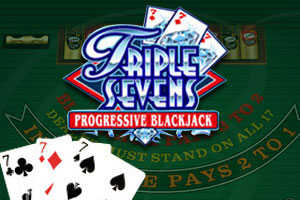
Triple 7’s Blackjack

Triple 7's BlackjackBlackjack fans will like this version of the game from Microgaming with the opportunity to grab the Progressive jackpot. The standard blackjack rules apply but you have to make a mandatory $1.00 triple 7?s side bet.



You of course play to beat the dealer on 21 but the real objective of this version is to get consecutive 7?s. There are 5 decks of cards which are re-shuffled after every game so the 7?s are there!

The rewards for 7?s are as follows

  • Two consecutive 7?s of mixed suits wins seven credits
  • Two consecutive 7?s of the same suit wins fifty credits
  • Three consecutive 7?s of mixed suits wins two hundred and fifty credits
  • Three consecutive 7?s of the same suit wins one thousand credits
  • Three consecutive 7?s of diamonds and you win the Progressive jackpot

It is worth noting that even if you lose against the dealer on 21 you still win your credits on 7?s

Play Triple 7’s Blackjack now at:

A Simple Card Counting System

Let’s start with a very simple system. After you have mastered basic strategy play, this system should only take a couple of dozen hours play to learn but it will dramatically increase your results. This system will involve a simple count, a running count, bet progressions and a few minor adjustments to play.
First the count. Our count will keep track of 10’s and A’s on one hand and 2’s, 3’s, 4’s, 5’s, and 6’s on the other. Start by keeping a running count of your advantage or disadvantage. In the interest of simplicity we will start with a single deck. A deck of cards has 4 A’s and 16 10’s ( 4 each of 10, J, Q, and K) for a total of 20 cards that benefit the player. The deck also contains 20 cards that are advantageous to the dealer ( 4 each of 2, 3, 4, 5, and 6). As noted earlier, 5’s and 6’s are “better” for the dealer than 2’s, 3’s, and 4’s but this is a simple count. Much more sophisticated counts exists and the reader is encouraged to master this one first and then begin to look at more complex systems.

So, we know we start with a running count of zero. Twenty cards for the player, twenty for the dealer – no advantage – zero. As play begins, you will add 1 to your “count” for every 2, 3, 4, 5, or 6 that is dealt. For each 10 or A, subtract one. The idea is simple. If a 5 is dealt, the deck now contains 20 “10s” and 19 of the “other” cards. More tens is to your advantage so you add one. If a 10 (or J, Q, K, or A) is dealt next, the advantage is back to 0 ( 19 to 19 ). Now you have a running count. As long as play continues with the same deck you will add 1 for every 2, 3, 4, 5, or 6 you see and subtract one for every 10 or A you see.

The next step is to adjust the running count so that you have a “real” count for the entire shoe. In a one deck game (which is rare), this is simple; but in a multi-deck game the advantage will be significantly different (though still an advantage). Compare our one deck example with a six deck game. Let’s assume in our one deck game you have seen 11 “10s” and 14 of the “other” cards. This gives you a running count of +3 ( 0 plus 14 minus 11 ). In a six deck game you will have the same running count but the advantage is not as great.

Looking at the actual number of cards we will see the difference. In our one deck example, there are 9 “10s” left and only 6 of the others. If there are six decks in the shoe, and the same number of cards have been dealt, you have 109 “10s” and 106 “other” cards. It is clear that a 9:6 advantage is much different than a 109:106 advantage.

The easiest way to adjust for multiple decks is to divide your running count by the number of decks. In our example, you would have an advantage of +3 if there were only one deck, but an ad-vantage of +0.5 if there were six decks. ALL OF YOUR BET ADJUSTMENTS NEED TO BE BASED ON THE “REAL” COUNT. If you have a real count of +0.5, you have an advantage. If you have any number less than +0.5, you do not have an advantage.

Now that you have counting down, we will discuss what to do with that knowledge. Let’s take a look at a simple bet adjustment strategy that can be mastered by anyone. Start with a base unit for your betting. Your bet on each hand should be calculated based on this base unit of betting as follows. Your “default” bet is 2 times the base unit. When your “real” count drops below 0, drop your bet to the base unit. When your “real” count is greater than or equal to one, you should increase your “default” bet by the amount equal to your base unit times the count.

Let’s look at an example. If you base unit is $5, play would go as follows. When the count is positive but less than one, you will bet $10 ( 2 times $5 ). When the count is below zero, you will bet $5 ( base unit ). When the count is +1, you will bet $15 ( $10 + $5 times count). If the count is +3, you will bet $25, etc.